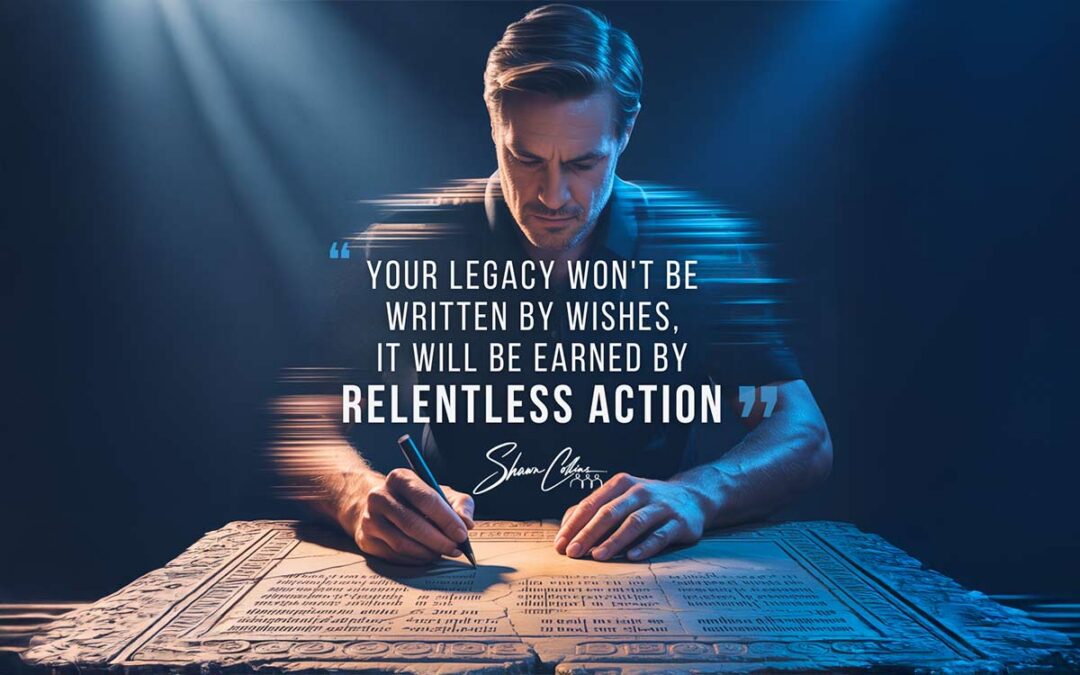
Your legacy will not be written by what you hoped might happen. It will be written by what you were willing to do, day after day, when no one was clapping.
If you lead a business, a team, or a growing organization, you already know how loud wishes can be. You wish people would communicate better. You wish your leaders would take more ownership. You wish your culture felt healthier, more aligned, less dependent on you holding everything together.
Wishes feel honest. They reveal what you want. But they do not build anything.
Legacy, in leadership, is not what you intended. Legacy is what you repeatedly did.
What Legacy Really Means In Your Role
When most people hear the word “legacy,” they picture something distant and dramatic. A retirement party. A name on a building. A company that outlives its founder.
That version feels vague and far away, so it is easy to push it off. You tell yourself you will think about legacy later, after the next growth spurt, after the next hire, after the next crisis.
But your legacy is not waiting on the horizon. It is forming right now in the way your people experience you, day by day.
Your legacy is the story your team tells about what it felt like to work under your leadership.
Not the story on your website. Not the story in your strategic plan. The story in the break room. The story in the quiet car ride home. The story your people tell their spouse when they answer the question, “How was work today?”
For a business owner, HR director, or entrepreneur, legacy shows up in things like:
- The level of trust people feel when they walk into a meeting with you.
- The clarity or confusion that surrounds every new initiative.
- Whether your top performers stay and grow, or quietly plan their exit.
- How your team responds when pressure hits, conflict rises, or plans shift.
Those outcomes are not accidents. They are the product of hundreds of small, repeated choices, made by you and reinforced by your culture.
That is legacy. Not a speech at the end. A pattern in the middle.
Why Wishes Cannot Carry That Weight
Wishes feel good because they let you imagine a different future without requiring a different today. You can wish for:
- A culture of ownership.
- Leaders who communicate clearly and courageously.
- Employees who think like stewards, not renters.
- Healthy growth that does not sacrifice people on the altar of performance.
None of that is wrong. The problem is that wishes create a false sense of progress. You feel like you are moving because you care. You feel engaged because you are frustrated.
Care and frustration do not change culture. Only aligned, repeated action does.
When you rely on wishes, three things usually happen:
1. You confuse intention with impact
You intend to be clear, but you leave conversations with vague expectations. You intend to empower your leaders, but you still make every key decision. You intend to value people, but your calendar communicates that tasks matter more than development.
From your side of the table, you feel committed. From the other side, your team feels uncertain. Legacy is shaped by their experience, not your private intentions.
2. You outsource growth to circumstances
Wishes often sound like, “Once we hire the right person,” or “When revenue hits [insert metric].” In other words, you place your future culture in the hands of timing, markets, or talent you do not yet have.
A healthy legacy does not wait for perfect conditions. It is built through consistent behavior inside imperfect ones.
3. You tolerate patterns that quietly erode trust
Every time you postpone a hard conversation, accept misalignment, or let poor behavior slide because you are tired, you write another sentence in your legacy.
Not because you are a bad leader, but because culture listens to what you tolerate. Wishes never override what you tolerate.
Legacy As Daily Stewardship, Not Future Recognition
There is a deeper layer here, especially if you view your leadership as stewardship, not ownership.
Legacy is less about how loudly you are remembered and more about how faithfully you used the authority, influence, and resources that were trusted to you. That is a character question, not a branding question.
Your title gives you authority. Your character gives you legacy.
For leaders who lead with faith as an internal compass, this reframes the whole conversation. You are not just building a successful company or a resilient HR function. You are shaping people, families, and futures, through what you normalize and what you refuse to accept.
That requires more than wishes. It requires the quiet discipline to align your actions with your values, even when no one notices in the moment.
Legacy Lives In Culture, Not Just Outcomes
Revenue, headcount, and market position all matter. They are signs of performance. But they are not the whole story of your legacy.
Legacy sits in your culture. That includes:
- The clarity with which you communicate expectations and feedback.
- The consistency between what you say you value and what you actually reward.
- The way conflict is handled, and whether truth is spoken with courage and care.
- The level of ownership people feel over their work, their growth, and the mission.
Healthy culture is not built by slogans, posters, or one-time events. It is built by relentless, aligned action. The emails you send. The meetings you lead. The behavior you correct. The trust you extend. The accountability you uphold.
Every repeated behavior is a brick in the culture you are building, and that culture will outlive you.
Your First Step: An Honest Look In The Mirror
Before you start designing new strategies or rolling out new initiatives, you need clarity on one simple question.
What is it like to be on the other side of your leadership, right now?
Not what you hope it is like. What it is actually like.
Take a quiet moment and ask yourself:
- What do my people know they can count on from me, every time?
- Where do my actions contradict what I say I value?
- What do I keep wishing would change that I have not yet taken ownership to address?
That level of honesty is where legacy building begins. Not with a grand vision statement, but with clear-eyed ownership of the gap between what you wish for and what you consistently do.
Your next move matters more than your next wish.
As you continue through this article, we will move from tension to practice, from frustration to concrete action, so you can build a legacy of clarity, culture, and leadership that is earned, not imagined.
Reflection for today: Where in your leadership have you been relying on wishes instead of taking specific, visible action? Write down one area, and commit to one concrete step you will take before the end of this week.
Understanding The Gap Between What You Want And What Actually Happens
If you lead a mid-sized organization, you live in the gap between aspiration and execution every day. You see what your culture could be, you hear what your people say they want, and you carry a vision for where the company needs to go. Then you look at the calendar, the inbox, the meetings, and you feel the drag.
This is the tension of your role: you are responsible for outcomes you often cannot directly touch, through people who do not always share your urgency, inside systems that were not designed for clarity.
That tension is where wishes grow loud and action grows vague.
The Business Owner’s Challenge: Stuck Between Vision And Velocity
If you own a business with [insert employee range], you usually sit in a strange middle space. You are no longer small enough to run on hustle and familiarity, and you are not yet large enough to have deep leadership benches and mature systems. You can feel the strain.
Common patterns show up, such as:
- Vision that outpaces structure. You see where the company needs to go, but roles, processes, and decision rights have not caught up. So you stay in every conversation, or clean up after them.
- “Shadow ownership” of problems. You tell people, “You own this,” but you still carry the mental load. You wake up thinking about issues that someone else is technically responsible for.
- Firefighting culture. Everyone is busy, but few are working from clear priorities. Emergencies win. The urgent outruns the important.
You want a culture of ownership, but you still function as the safety net. You want leaders, but you often treat them as helpers. You want people to think long term, but your schedule rewards whoever reacts fastest.
The result: your legacy risks becoming “They worked hard and held it together” instead of “They built leaders who carried the mission with them.”
The HR Director’s Challenge: Responsible For Culture Without Full Authority
If you are in HR, you sit at the intersection of people, policy, and pressure. You hear what employees are afraid to say out loud. You listen to leadership’s expectations. You watch the culture form in real time, often without the tools or authority to correct what you can clearly see.
The gap between aspiration and action often looks like:
- Leaders saying one thing and rewarding another. The organization talks about values, but promotion, recognition, and tolerance of behavior tell a different story.
- Performance conversations without clarity. Managers are asked to “hold people accountable,” but no one has defined what great performance actually looks like in concrete behavior.
- HR as the complaint department, not a strategic partner. You are pulled into issues once they explode, not invited in early when strategy and structure are being shaped.
You may carry a clear picture of the culture your organization says it wants: healthy communication, strong leaders, and teams that own outcomes. Yet your days are filled with policy interpretation, conflict mediation, and filling gaps created by unclear leadership.
That disconnect wears on your conviction. You want to build, but you feel like you are patching. You are asked to drive change, but the people who hold the authority to change their own behavior often do not see themselves as part of the problem.
The Entrepreneur’s Challenge: From Grit To Structure Without Losing Soul
If you are an entrepreneur, you started with action. You did not wait for permission. You created something that did not exist. That is part of your strength and part of your challenge now.
As your venture grows into a mid-sized organization, new tensions appear, such as:
- Letting go without disappearing. You know you cannot touch everything, but when you step back, things slip. When you step in, people default to you again.
- Translating instinct into clarity. You built the business on intuition and speed. Now your team needs definition. Clear expectations, repeatable processes, and decision guidelines. You feel like you are slowing down to explain what feels obvious in your gut.
- Culture by default, not design. Early on, culture was just “how we do things.” Now new people enter who did not live through the early days. Your values are no longer obvious. They must be taught, modeled, and reinforced on purpose.
You want to keep the soul of what you built. You want people who act like owners, not clock-watchers. You want decisive, aligned leaders. But your calendar is full, your attention is scattered, and your language around culture is often inspirational instead of operational.
Without a shift toward consistent, defined action, your legacy can drift into nostalgia. People remember how it was at the beginning, while they tolerate how it is right now.
Why The Gap Keeps Growing As You Scale
Whether you are a business owner, HR director, or entrepreneur, one reality sits underneath your daily pressure.
As your organization grows, every inch of your personal inconsistency becomes a mile of cultural confusion.
At [insert smaller size], people can read your intent. They know your heart, hear your tone, and feel close enough to ask for clarity. By the time you reach [insert higher size], most people experience your leadership through secondhand information, policies, and the behavior of your direct reports.
Here is what often happens when wishes run the show:
- You wish for better communication, but you do not define a simple, shared language that leaders use in every meeting.
- You wish your managers would own performance, but you have not trained them to coach, give feedback, or make hard calls with integrity.
- You wish for strong alignment, but you keep shifting priorities without closing loops or clarifying tradeoffs.
None of this makes you a bad leader. It makes you a human leader, under pressure, without clear frameworks that translate your values into daily behavior.
The result is that good intentions pile up while culture drifts. People start to roll their eyes at new initiatives. HR feels squeezed in the middle. Owners feel isolated. Entrepreneurs feel like strangers inside their own company.
The Emotional Cost: Quiet Frustration And Private Doubt
There is also a personal side you rarely say out loud.
- You are tired of repeating yourself about the same issues and seeing little change.
- You carry the weight of other people’s livelihoods and wonder if you are stewarding that responsibility well.
- You feel the gap between the leader you want to be and the leader you are on your worst days.
You may even think, at times, Maybe this is just as good as it gets. Maybe people do not change. Maybe culture is just hard.
Here is the truth. Culture is hard, but it is not mysterious. Legacy is heavy, but it is not vague. The gap you feel is real, and it can shrink, not through bigger wishes, but through smaller, clearer, repeated actions that align with who you say you want to be as a leader.
A Practical Question To Ground You
Where, specifically, does the gap between your aspiration and your current behavior show up the most?
To answer that with clarity, pick just one of these areas and name it in concrete terms:
- Communication and expectations
- Accountability and follow through
- Leadership development and ownership
- Hiring, onboarding, and culture fit
- Decision-making and priorities
Write down one sentence that describes the gap. Keep it simple, such as, “We say we value ownership, but we rarely remove responsibilities from people who do not follow through.”
The Power Of Relentless Action
Wishes describe what you want. Relentless action describes who you are.
If legacy is the story your people tell about you, relentless action is the plot. It is what moves the story forward. Not the big moments on stage, but the steady decisions you make in meetings, one-on-ones, hiring conversations, and hard feedback sessions.
For a business owner, HR director, or entrepreneur, your reputation and influence do not grow because you care more than others. They grow because you act with clarity and consistency when others stall, avoid, or delay.
Why Action, Not Hope, Builds Your Reputation
Think about how people quietly measure you as a leader. They are not grading your intentions. They are watching for patterns, asking three questions:
- Are you clear? Do you say what you mean, or do people have to guess?
- Are you consistent? Do your actions match your words, especially under pressure?
- Are you committed? Do you stay with the hard work long enough for change to take root?
Relentless action answers all three with proof.
When you follow through on what you say, people start to trust your word. When you address issues directly instead of waiting for them to fade, people learn that problems will not be ignored. When you keep showing up for the slow work of culture, people see that your values are not seasonal slogans.
Reputation is not formed in a single decision. It is formed in repeated exposure to your choices.
Hope can explain what you wish would happen. Only action can explain what people actually experience.
Relentless Action Multiplies Your Influence
Influence is not about personality size. It is about predictability of character.
When your team knows how you will respond to truth, failure, and responsibility, they lean in. They bring you problems earlier, not later. They feel safe to tell you the truth, even when it costs them. They begin to adopt your standards as their own.
That kind of influence does not show up because you gave a powerful speech. It shows up because you keep doing specific things, such as:
- Having the hard conversation the same day instead of rehearsing it for weeks.
- Clarifying expectations at the front end of projects, not blaming people at the back end.
- Owning your part when something breaks, before you point to anyone else.
- Refusing to reward results that violate your values, even when they help the numbers.
Every time you choose action over avoidance, you earn more influence with the people who are watching.
This is where faith and character meet leadership. Influence is not a right that comes with your title. It is a stewardship that grows when people see you align your behavior with your beliefs, consistently, especially when it would be easier to look away.
Why Consistency Beats Intensity For Sustainable Outcomes
Most leaders are capable of intensity. You can rally everyone around a new initiative. You can demand a sprint, push through a deadline, or make a dramatic announcement about culture.
The problem is not your ability to start. The problem is your capacity to sustain.
Legacy is built more by what you do weekly than what you declare annually.
Sustainable outcomes, the kind that actually change culture and performance, come from consistent, purpose-driven habits such as:
- A recurring leadership meeting that focuses on clarity, alignment, and real accountability, not just status updates.
- A simple cadence for one-on-ones where leaders ask the same few clarifying questions every time.
- A shared communication protocol that every manager uses to deliver expectations and feedback.
- A regular review of values versus behavior, where you name gaps and take visible action.
These routines may not feel dramatic, but they quietly reset norms. They teach your organization what “normal” looks like under your leadership.
Hope does not create new norms. Rhythms do.
Relentless Action Anchored In Purpose, Not Ego
Relentless action on its own can drift into hustle, burnout, or control. That is not what we are talking about here.
We are talking about purpose-driven action. Activity that is clearly tied to who you want to be as a leader, what kind of culture you want to build, and what you believe you are called to steward.
Purpose-driven action asks different questions:
- “Is this task aligned with our mission and values, or is it just noise?”
- “Am I acting from conviction or from fear of what others will think?”
- “Does this decision honor people and performance, or am I sacrificing one for the other?”
For leaders guided by faith, this becomes a spiritual discipline. You are not just grinding. You are serving. You are not just chasing outcomes. You are stewarding people and opportunities that do not belong to you forever.
Purpose keeps your action from becoming frantic. It keeps your pace sustainable and your motives clean.
How Relentless Action Reshapes Culture From The Inside Out
Culture is often treated like an event to manage. A survey. A retreat. A campaign.
Relentless action treats culture as the byproduct of consistent leadership behavior. When you act with clarity and follow through, over time, culture begins to shift in ways you can describe and measure, such as:
- People start to name and address misalignment without waiting for HR or senior leadership.
- Managers use a shared language for feedback and expectations, which reduces confusion.
- High performers feel seen and challenged, not drained and taken for granted.
- Low performers are coached clearly, supported fairly, and, if needed, exited with integrity.
None of that happens because you wished for “a healthier culture.” It happens because you chose targeted, repeatable actions and held to them when it was inconvenient.
Retention improves when trust increases, and trust increases when your actions become reliably aligned with your words.
This is why culture beats strategy when clarity leads the way. Strategy can describe where you want to go. Culture carries you there, or blocks you, based on the behaviors you consistently practice and permit.
A Framework To Test Whether Your Action Is Truly Relentless
If you want to know whether you are living in wishes or relentless action, run your current behavior through three simple filters:
- SpecificCan you name the concrete actions you are taking to shape culture, leadership, and performance, or are you speaking in vague intentions?
- ScheduledDo these actions live on your calendar and your leaders’ calendars, or are they “whenever I have time” activities?
- SustainedHave you committed to these actions for a defined period, long enough to see real change, or do you move on as soon as things get uncomfortable or boring?
If an action is not specific, scheduled, and sustained, it will not shape your legacy. It will remain a wish with better branding.
Your Next Move: Choose One Area For Relentless Action
You do not need to overhaul everything at once. In fact, trying to do that usually keeps you stuck in frustration.
Choose one area where your leadership impact is too important to leave to wishes.
For example, pick just one of these focus areas:
- How you communicate expectations before work begins.
- How you follow up on commitments that were missed.
- How you develop and hold your direct reports accountable.
- How you address behaviors that violate your stated values.
Then define one specific, scheduled, and sustained action you will take in that area for the next [insert time frame]. Write it down. Put it on your calendar. Share it with at least one person who can see whether you follow through.
That decision is where your legacy shifts from wished for to earned.
In the next section, we will look at the mindset shifts you need to support this kind of relentless action, so that it does not depend on willpower alone, but grows out of who you are becoming as a leader.
Mindset Shifts Necessary For Earning Legacy
Relentless action does not start on your calendar. It starts in your mindset. If you try to change behavior without changing how you think about your role, pressure, and people, you will slide back into old patterns the moment things get hard.
Your legacy is not just a record of what you did. It is a reflection of who you decided to become.
That kind of legacy requires some deep, practical mindset shifts, especially around accountability, resilience, and how you solve problems.
From “I Hope They Get It” To “I Am Accountable For Clarity”
One of the quiet traps for any leader is the belief that other people should just “get it.” They should know what ownership looks like. They should understand priorities. They should see what is urgent and what can wait.
When they do not, frustration grows. You start wishing for “better people” instead of owning your responsibility to be a clearer leader.
The mindset shift: I am accountable for the clarity I provide, not just the outcomes I want.
This means you start to measure yourself by different questions, such as:
- Did I define what success looks like in specific, observable terms, or did I just share a general desire?
- Did I confirm understanding and alignment, or did I assume that silence meant agreement?
- Did I set clear decision rights and boundaries, or did I leave people to guess what authority they actually have?
Accountability starts with you before it ever lands on your team. When you treat clarity as your responsibility, not a favor you give when you have time, people begin to feel safe owning more. That is how cultures of ownership are born.
Legacy question: If your team wrote down your top three expectations in their own words today, how close would they be to what is in your head?
From Blame And Excuses To Radical Ownership
When things go sideways, most leaders feel a reflex rise up. You look for who dropped the ball. You point to circumstances, staffing, or constraints. You mentally list all the reasons this outcome was “inevitable.”
That reflex is human, but it is also how legacies drift into mediocrity.
The mindset shift: Everything may not be my fault, but as a leader, it is all my responsibility.
Radical ownership is not about carrying private shame. It is about choosing to ask a different first question when something breaks.
- Instead of “Why did they do that?” you ask, “Where was I unclear or inconsistent?”
- Instead of “Who is to blame?” you ask, “What system, habit, or standard allowed this?”
- Instead of “Why do they not care?” you ask, “What have I rewarded, tolerated, or ignored?”
This mindset is uncomfortable, especially when you already feel maxed out. But it is the soil where trust grows. When your team sees you own your part first, without defensiveness, it becomes much easier for them to own theirs.
From a faith perspective, this is humility in practice. You stop protecting your ego and start stewarding your influence. You care more about the health of the culture than about looking flawless.
Legacy question: When something goes wrong, what do people expect from you first, honest ownership or quick defensiveness?
From Fragile To Resilient: Redefining What “Hard” Means
Culture work is slow. Leadership development is slow. Correcting patterns that have been tolerated for a long time is slow. If your mindset expects quick payoff, you will quit the right things too early.
The mindset shift: Hard is not a signal to stop. Hard is a signal that I am doing work that matters.
Resilience is not stubbornness. It is the decision to stay engaged with reality without losing hope or lowering your standards. Practically, that means you begin to:
- Expect resistance when you clarify expectations, and prepare for it rather than being surprised by it.
- Treat setbacks as data about your systems and habits, not as verdicts on your identity.
- Hold a long view, where progress is measured in patterns over time, not in one good or bad week.
This is especially important for HR leaders and entrepreneurs, who often feel the emotional whiplash of other people’s reactions. If you measure the value of your work by immediate applause, you will abandon necessary changes the moment they create discomfort.
Resilient leaders anchor their hope somewhere deeper than this quarter’s response. For many, that anchor is faith. You remember that you are called to be faithful with what you have been given, not perfect in everyone’s eyes. That perspective gives you endurance that frantic leaders never find.
Legacy question: When the work of change gets hard, do you lower the bar, blame the team, or stay steady on what you know is right?
From Passive Reacting To Proactive Problem-Solving
Most organizations live in reaction mode. Problems show up on your calendar when they are already urgent. People come to you with complaints and half-baked solutions. HR is pulled into fires that have been smoldering for a long time.
In that environment, wishes feel like relief. You wish things would just “settle down.”
The mindset shift: I will treat problems as signals to design better systems, not just fires to put out.
Proactive problem-solving is a way of thinking, not just a process. It starts with three simple habits:
- Name patterns, not just incidentsInstead of viewing each conflict, missed deadline, or turnover as a stand-alone event, you start asking, “Where have we seen this before?” Legacy is shaped by how you handle the pattern, not how you talk about the one incident.
- Move upstreamInstead of asking, “How do we fix this fast?” you ask, “What made this possible in the first place?” That question moves you into root causes such as unclear roles, inconsistent follow-up, or values that exist on paper but not in practice.
- Design visible, simple responsesProactive leaders do not just think about solutions. They create small, clear changes that everyone can see, such as a new decision rule, a standard question in one-on-ones, or a non-negotiable for how a specific situation will be handled next time.
This mindset is where culture shifts from accidental to intentional. Problems stop feeling like personal attacks and start becoming invitations to sharpen how you lead.
Legacy question: When the same issue shows up [insert frequency], do you accept it as normal, or do you treat it as a design flaw you are responsible to address?
From Control To Stewardship Of People
If you have carried a business, a department, or a venture on your back for a long time, control can feel like safety. You know if you touch it, it will get done. You know your way works. You built this.
Control can keep things moving for a season, but it will choke your legacy over time, because it prevents others from growing into real leaders.
The mindset shift: My job is not to be the hero. My job is to build and steward other leaders.
Stewardship thinks differently about people and power:
- You see your authority as a temporary trust, not a permanent identity. You will not always sit in your current seat, but the people you develop will outlast your tenure.
- You view mistakes from your team as opportunities to coach, not just evidence that you should do it yourself next time.
- You release responsibility in clear stages, staying close enough to support, but far enough to let others feel the real weight of decisions.
From a faith lens, stewardship means you recognize that every person on your team carries their own calling and potential. You are not using them to build your legacy. You are serving them as they build theirs, inside the mission you lead.
Legacy question: If someone took your role tomorrow, would your team be ready because you built them, or would everything collapse because you held on too tightly?
From Image Management To Inner Integrity
Leaders are often tempted to manage perception. You want your board, your peers, or your team to see you as strong, confident, and in control. There is a subtle pressure to curate your image instead of telling the truth about where you need to grow.
The mindset shift: My private integrity matters more than my public image.
Inner integrity shows up in quiet choices, such as:
- Admitting when you do not know and inviting wiser counsel instead of pretending.
- Keeping your word on the small, invisible commitments, not just the big public ones.
- Confessing, even to a trusted few, where fear, ego, or fatigue are shaping your decisions.
When your inner life and outer leadership match, people feel it. They may not be able to explain it in words, but they experience you as solid, trustworthy, and safe to follow. That kind of congruence is rare, and it is at the heart of a legacy worth leaving.
For leaders guided by faith, this mindset is rooted in the belief that you lead before an audience of One. You answer to a higher standard than public opinion. That conviction brings both sobriety and freedom.
Legacy question: If someone could see the gap between your public words and your private habits, would it strengthen their trust in you or weaken it?
A Simple Reflection To Cement These Shifts
Mindset shifts do not happen because you nodded along while reading. They happen when you name, in clear language, where you need to think differently and what that will change in your behavior.
Take ten quiet minutes and write down your answers to these prompts:
- Where do I still expect others to “just get it” instead of owning my responsibility to be clear?
- What recent situation exposed my reflex toward blame instead of ownership?
- Which current “hard thing” in my leadership do I need to reframe as meaningful, not impossible?
- What pattern have I been reacting to that I need to address proactively at the system level?
- Where am I holding on to control instead of stewarding and developing other leaders?
- What private habit or compromise, if left untouched, will eventually damage my legacy?
Circle one answer that stings the most. That is your growth assignment.
In the next section, we will translate these mindset shifts into concrete strategies you can put into place, so your vision stops living in your head and starts living in how your organization actually operates, week by week.
Strategies To Translate Vision Into Action
Mindset shifts create desire. Strategies create movement. If you stop at conviction, your vision will stay trapped in your head while your culture drifts. You need concrete ways to turn what you see into what your people do, repeatedly, without you having to push every inch.
Vision that cannot be translated into daily behavior is not leadership clarity. It is leadership noise.
This section will give you practical strategies for goal setting, prioritization, delegation, performance tracking, and continuous improvement that fit a mid-sized organization and honor both people and results.
1. Turn Vague Vision Into Concrete, Shared Goals
High-level vision sounds inspiring, but your team needs targets they can aim at and measure. You do not need complex frameworks to do this. You need simple, shared agreements.
Use this basic goal framework with your leadership team:
- Clarify the “why” in one sentenceBefore you talk metrics, answer this: Why does this goal matter for our culture and our mission? Keep it short and human, so leaders can repeat it to their teams without translation.
- Define the “what” in specific termsState the goal in language that removes confusion. Replace phrases like “improve engagement” with simple, observable outcomes, such as, “We will [insert clear behavior or output].” If a new hire could not tell whether the goal was met, it is not specific enough.
- Assign a clear “who” and “by when”Every shared goal needs one directly responsible owner and a realistic timeline. Commit to a specific review point on the calendar, where you will evaluate progress as a team.
When you align on why, what, who, and by when, your vision moves from concept to commitment. HR can build people practices around it. Managers can translate it into daily work. Your culture starts to feel direction, not just energy.
Leadership action: Pick one core vision area, and run it through this framework with your top team in the next [insert time frame]. Do not leave the room until the “what” is specific and someone owns it.
2. Prioritize With Ruthless Clarity, Not Wishful Thinking
Most mid-sized organizations are not suffering from a lack of ideas. They are suffering from an overload of priorities that no one has the capacity to execute. This is where legacy quietly dies, under the weight of half-finished “important” projects.
Use a simple 2×2 priority filter with your team:
- Axis 1: ImpactAsk, “If we did this well, how much would it move our mission, culture, or performance?” Rate each initiative as high impact or low impact.
- Axis 2: ReadinessAsk, “Do we have the people, clarity, and basic systems to execute this within [insert time frame] without breaking the team?” Rate each as high readiness or low readiness.
Then place each initiative into one of four categories:
- High impact / High readinessThese are your top priorities. Choose a small number you can truly support, and commit.
- High impact / Low readinessDo not launch these now. Instead, design a “readiness plan” that builds the capacity, clarity, or leadership depth required.
- Low impact / High readinessThese can be delegated or delayed. They feel easy, but they rarely shape legacy.
- Low impact / Low readinessSay no, clearly. Every yes here steals energy from what truly matters.
Clarity is an act of stewardship. When you name what you will not pursue right now, your people stop guessing. They can invest their effort without wondering when the next surprise initiative will land in their lap.
Leadership action: Take your current list of projects and place each in one of these four categories. Then communicate, in writing, what your top three priorities are and what is paused or stopped for the next [insert time frame].
3. Delegate Like A Leader, Not A Task Distributor
Delegation is where many visions stall. You think you have handed something off, but you really just assigned tasks without clarity, authority, or support. The result is frustration on both sides and more proof, in your mind, that “no one cares like I do.”
Use a simple delegation checklist for every significant responsibility you hand off:
- OutcomeDescribe the desired outcome in concrete language. Answer, “What does success look like?” in a way that can be observed, not just felt.
- AuthorityState what decisions this person can make without you. Be explicit: budget limits, hiring input, process changes, and when they must check in before acting.
- ResourcesClarify what support, people, and tools are available. If they need something you have not provided, name how they can request it.
- CadenceAgree on how often you will check in and what you will review. For example, a brief weekly update that covers progress, roadblocks, and decisions needed.
- StandardExplain the non-negotiables. These are the values and quality lines that cannot be crossed, even if it slows progress.
This approach respects both the person and the mission. It gives them what they need to act like an owner, and it gives you what you need to trust their leadership.
For HR leaders, this same model works when you coach managers on delegation. You are not just teaching them to move tasks. You are helping them grow people and extend the culture.
Leadership action: Choose one responsibility you keep taking back. Use this checklist to re-delegate it, clearly, and then hold to the agreed cadence instead of jumping in at the first sign of discomfort.
4. Track Performance In Ways That Actually Shape Behavior
Performance tracking often gets reduced to forms, ratings, and annual reviews that everyone endures but no one trusts. If your goal is legacy and culture, your tracking needs to do more than satisfy a process. It needs to shape how people think and act, week by week.
Use a simple, repeatable performance rhythm:
- Set expectations at the start of each cycleFor each role, clarify a small set of key responsibilities and behaviors that matter most for this season. Use plain language. Tie each one to how it supports the mission and culture.
- Hold short, consistent one-on-onesCoach your managers to meet with each direct report on a predictable rhythm. Provide them with a standard question set, such as:
- “What are your top [insert number] priorities this week?”
- “Where are you stuck or unclear?”
- “What support do you need from me?”
- “Where did our values get tested this week?”
- Connect feedback to behavior, not personalityTrain leaders to describe what they observed, what impact it had, and what “better” looks like. For example, “When [insert behavior], the impact was [insert impact]. Next time, choose [insert alternative behavior].”
- Review patterns, not just eventsUse periodic reviews to look at trends. Where has this person consistently delivered? Where have they consistently struggled? What system, support, or boundary needs to change?
Performance conversations are where culture becomes visible. If you want a legacy of ownership and integrity, those values must show up in how you measure, coach, and reward people, not just in how you describe your company.
Leadership action: Standardize a simple one-on-one template for all managers and require its use for the next [insert time frame]. HR can gather feedback and refine it, but do not let it remain optional.
5. Build Continuous Improvement Into Your Culture, Not Just Your Projects
Continuous improvement is not just about processes. It is about humility and stewardship. It is the belief that, no matter how well we are doing, we can align more closely with our purpose and values.
Install a simple “review and refine” rhythm into your leadership team:
- Choose a clear review cadenceFor example, a leadership review every [insert time frame], where you step back from daily operations and ask how your systems and behaviors are serving your mission and culture.
- Use three grounding questionsBring the same questions every time, such as:
- “What is working that we need to protect and reinforce?”
- “What is not working that we have been tolerating?”
- “What is missing that we need to build or decide?”
- Choose small, visible improvementsResist the urge to overhaul everything. Identify a short list of specific changes you will test before the next review. Assign owners, timelines, and how you will know whether each change helped.
- Close the loop with your peopleShare, in plain language, what you learned and what you will do differently. When people see leaders learning, owning gaps, and adjusting, they learn to do the same.
For leaders guided by faith, continuous improvement is a form of repentance and growth. You acknowledge where your practices or patterns have drifted from what you say you value, and you turn, in action, back toward alignment.
Leadership action: Put the next two “review and refine” sessions on the calendar now, invite the right voices, and commit to leaving each one with no more than [insert number] specific changes to test.
6. Use Shared Language To Keep Everyone Aligned
Vision breaks down when every leader uses different words for the same ideas. One talks about “ownership,” another about “accountability,” another about “initiative,” and people on the front lines are left to guess what really matters.
Adopt a simple, common language for key leadership concepts.
Tools such as the 5 Voices or a clear Communication Code can help you name how different people communicate, how conflict should be handled, and how information should flow. The specific tool you choose matters less than your consistency.
Practical steps:
- Choose a small set of core terms for how you talk about communication, feedback, and expectations.
- Teach these terms to your leaders first, then roll them out to teams with simple, practical training.
- Expect your leaders to use this language in meetings, one-on-ones, and performance conversations.
Common language creates common understanding. Common understanding creates aligned action.
HR can be a powerful partner here, championing the language in hiring, onboarding, and development programs. When candidates and new hires hear the same words consistently, they know your culture is not accidental.
Leadership action: Choose one shared tool or language system you will commit to across the organization. Set a clear rollout plan, and hold leaders accountable for actually using it, not just attending a training.
Your Assignment: Choose One Strategy And Put It On The Calendar
Reading strategies does not build legacy. Implementing one, with consistency, does.
Right now, choose one of these focus areas:
- Clarifying one key goal with why, what, who, and by when
- Prioritizing your project list with the impact and readiness filter
- Re-delegating one major responsibility using the delegation checklist
- Standardizing one-on-ones with a simple question set
- Scheduling a recurring “review and refine” leadership session
- Selecting and rolling out one shared language or tool for communication
Write down the specific action, choose a date and time, and invite the people who need to be there. Put it on your calendar before you move to the next section.
Your legacy grows every time you choose a clear strategy, schedule it, and follow through long enough for your culture to feel the difference.
In the next section, we will look at how your leadership presence and behavior can model relentless action in a way that shapes your entire culture, not just your processes.
Leadership’s Role In Cultivating Relentless Action
Relentless action does not start in HR policies or project plans. It starts with you. Culture always takes its cues from the people at the top of the org chart and the middle of the org chart, the ones your teams watch every day.
You cannot delegate the responsibility to model relentless action. You can only multiply it through the way you lead.
If you want a culture that values execution, persistence, and adaptability, your people must see those qualities in your calendar, your conversations, and your decisions, especially when pressure rises.
Model The Pace You Want The Culture To Keep
Your team is always reading your pace. Not just how fast you move, but how consistently you move.
If your energy comes in bursts, your culture will live on spurts of intensity followed by long seasons of drift. If you are frenzied and scattered, your culture will confuse busy with productive. If you are steady, clear, and focused on the right things, your culture will eventually match that rhythm.
To cultivate relentless action, model a steady, sustainable pace.
- Protect time for the important, not just the urgent. Block recurring space for strategic thinking, leadership development, and culture conversations. When people see those blocks survive the week, they learn that culture work is not optional.
- Start and end meetings on time. You signal respect, discipline, and predictability. Chronic lateness from leaders teaches that commitments are flexible and priorities are fluid.
- Limit last-minute fire drills you create. Urgency will come. Do not add chaos through poor planning. When you consistently drop tasks on people at the last minute, you normalize reactivity instead of preparation.
Your schedule is a public document of your values. If you want relentless action, show your team what relentless, not frantic, looks like in real time.
Make Execution A Visible Leadership Priority
People do what leaders watch. If you only celebrate ideas, strategy sessions, and vision casting, do not be surprised when execution feels like the boring part no one wants to own.
Shift your leadership conversations to elevate execution.
- Ask different questions in meetings. Move from “What are we thinking about?” to “What did we commit to, what happened, and what is next?” Put follow through at the center of your agenda.
- Connect execution to your values. Instead of saying, “We need to get this done,” say, “Following through here is how we honor our commitments and build trust.” You are not just finishing tasks. You are shaping character.
- Close loops publicly. When you commit to an action in a meeting, start the next meeting by saying what happened. Even if progress is partial, people see that commitments have a life beyond talk.
For HR leaders, this means designing leadership development, check-ins, and review processes that reward follow through, not just good intentions. For owners and entrepreneurs, it means resisting the temptation to chase the next vision while loose ends pile up behind you.
Execution must feel like leadership work, not support work. You set that tone.
Create A Culture Where Persistence Is Normal
Relentless action requires persistence through boredom, resistance, and setbacks. If your people only see you engaged when things are new, exciting, or visible to others, they will copy that pattern.
Leaders normalize persistence by how they stay with the slow, unglamorous work.
- Hold the line on standards when it would be easier to relax them. When a value is tested by a tempting shortcut, your choice tells everyone whether that value is real.
- Stay engaged after the initial push. When you launch a new practice, such as one-on-ones or a communication tool, keep asking about it months later. Ask, “How is this working?” not just “Did we implement it?”
- Share your own “keep going” moments. Without turning it into a speech, briefly name times when staying with a hard process mattered. You are not telling stories to impress. You are naming persistence as normal.
For leaders guided by faith, persistence is an act of obedience, not ego. You stay with the work because you believe your role is to be faithful, not to chase constant novelty or applause.
When persistence becomes part of your leadership identity, it becomes part of your culture’s identity.
Respond To Failure In Ways That Build Ownership, Not Fear
The moment your team hits a miss or a setback, everyone looks at you. Your reaction teaches them whether it is safe to take responsibility or safer to hide.
Relentless cultures do not avoid failure. They handle it with clarity and courage.
- Lead with curiosity, not accusation. Start with “Help me understand what happened” instead of “How could this happen?” Curiosity opens the door to real information. Accusation closes it.
- Separate worth from performance. Make it clear that a failed initiative does not equal a failed person. You can hold a high bar and still treat people with dignity.
- Focus on learning and adjustment. Ask, “What will we do differently next time?” Then document that decision and follow up on it. That is how failures become fuel for better systems and stronger leaders.
This is where your character is on display. If you punish honest failure, people learn to play small, to wait for your direction instead of acting. If you address patterns clearly while honoring people, ownership grows.
Your legacy will reflect how safe it was to tell you the truth.
Make Adaptability A Shared Expectation, Not A Personality Trait
Adaptability is often mistaken for charisma or personality. Some people are seen as “flexible,” others as “rigid.” In a healthy culture, adaptability is a shared, taught expectation.
As a leader, you set the tone for how your organization responds to change.
- Explain the “why” behind change. When you adjust direction, do not just announce the new plan. Share the reasoning. People adapt faster when they understand the purpose.
- Acknowledge the cost. Name what will be hard about the change. When you validate the disruption, you earn more trust for the decision.
- Invite feedback on the “how.” You may hold firm on the “what” that must change, but involve your team in shaping the “how.” This teaches them that adaptability is a team sport, not a top-down demand.
One practical tool here is a simple communication code for change, a shared set of expectations for how information is shared, how questions are handled, and how decisions are communicated. Whether you use a formal tool or a homegrown one, the goal is the same, consistency.
Adaptability rooted in clarity builds confidence. People learn that change is not chaos. It is part of how your organization stays faithful to its mission in a shifting environment.
Use Your Communication To Reinforce Relentless Action
Your words either strengthen a culture of ownership or weaken it. Leaders who cultivate relentless action speak in ways that clarify responsibility, encourage courage, and remove excuses.
Pay attention to three aspects of your communication.
- Language of ownershipReplace phrases like “somebody needs to” or “we should” with clear names and commitments. For example, “You own this by [insert date]” or “I will decide this by [insert date].” Vague language feeds vague action.
- Language of expectancySpeak as if you expect people to rise to responsibility, not avoid it. Say, “I trust you to lead this. Here is what support looks like,” instead of, “Let us see if you can handle this.” Expectancy calls people up.
- Language of alignmentKeep tying actions back to mission, values, and agreed priorities. You might say, “We are choosing this path because it aligns with our value of [insert value].” This teaches your team how to think, not just what to do.
Tools such as 5 Voices help you understand how different team members naturally communicate, and where your own voice may land as too strong or too vague. When you adjust your style for clarity, you serve your people better.
Relentless action needs relentless clarity. Your communication is where that clarity either appears or disappears.
Design Rhythms That Force Leadership To Live Its Own Standards
If your standards only apply to the front line, your culture will split in two. One version for “them,” another for “us.” Over time, that gap erodes trust faster than any single decision.
Leaders must put themselves under the same disciplines they expect from others.
- Hold regular “leadership accountability” meetings. Use a simple format where your senior or mid-level leaders share their own commitments, progress, and misses. Not just their team’s, their own.
- Invite feedback from those you lead. Use a simple, structured question such as, “What is it like to be on the other side of my leadership right now?” Gather input through HR or direct conversations, and take it seriously.
- Publicly model adjustment. When you receive hard feedback, acknowledge it and name one change you will make. This does not make you weak. It proves you live the same growth standards you expect from your people.
For owners and entrepreneurs, this can feel vulnerable, especially if you have carried the weight alone for a long time. For HR leaders, you can champion and facilitate these rhythms, helping other leaders see that accountability at the top is the strongest culture lever you have.
When leaders live under the same standards they set, they earn the moral authority to expect relentless action from others.
Create Safety For Honest Conversation, Not Comfort For Avoidance
Relentless action thrives in an environment where people can speak honestly without fear, but not hide behind comfort when hard truths are needed. That balance is your responsibility to set.
Healthy cultures feel safe, not soft.
- Invite dissent with respect. In key decisions, ask, “What are we not seeing?” or “Who disagrees and why?” Then thank people for their honesty. Once the decision is made, expect alignment in action.
- Do not weaponize vulnerability. If someone takes a risk to raise an issue, do not punish them publicly or quietly. Address the content, not the courage it took to speak.
- Move from conversation to commitment. After honest dialogue, always land on clear actions, owners, and timelines. Conversation without commitment drains energy and teaches people that nothing really changes.
From a faith lens, this is where truth and grace meet. You create a culture where people can bring the whole truth to the table, and where that truth leads to repentance, adjustment, and new action, not shame or paralysis.
Your willingness to invite and act on truth is one of the strongest predictors of the legacy you will leave.
Your Leadership Assignment: Choose One Cultural Signal To Change
Culture is built through signals, what you consistently do, tolerate, and celebrate. To cultivate relentless action, you need to change at least one signal that your people see from you on a regular basis.
Choose one area and commit to a visible shift.
- Your meeting behavior, start and end times, follow through on actions.
- Your response to missed commitments, curiosity and coaching instead of avoidance.
- Your communication habits, moving from vague language to specific ownership and timelines.
- Your personal accountability, inviting feedback and naming your own adjustments.
Write down the specific behavior you will change, how often it will happen, and how your team will see it. Then tell at least one trusted leader or HR partner what you are committing to, and ask them to watch for it.
When you change your signals, you change your culture’s expectations. When you change expectations, you change behavior. That is how leaders cultivate relentless action, one visible choice at a time.
Next, we will confront the obstacles that regularly pull leaders away from action, such as fear, procrastination, resource constraints, and burnout, and we will put practical handles on how to move through them without losing your way.
Overcoming Common Obstacles To Action
By now, you know what relentless action looks like. You also know it is not your default. There are real reasons you slide back into wishing, reacting, and avoiding. If you do not name those obstacles clearly, they will quietly shape your legacy more than your intentions ever will.
Obstacles to action are not proof that you are weak. They are proof that you are human.
The difference between leaders who build lasting legacy and leaders who burn out or stall is not the absence of fear, procrastination, or constraint. It is their willingness to face those barriers with honesty, structure, and support.
Facing Fear Of Failure Without Letting It Run The Show
Fear of failure shows up differently for business owners, HR leaders, and entrepreneurs, but the internal script is similar. If I choose wrong, people will pay the price. If I confront this, it might blow up. If I try and miss, I will lose credibility.
When fear leads, you either freeze, overcontrol, or delay the hard decision while convincing yourself you are “gathering more information.”
Use this simple framework to move from fear to grounded action.
- Name the specific fearInstead of “I am just uneasy about this,” write a single, clear sentence such as, “I am afraid that if I change this leader’s role, I will lose them and destabilize the team.” Fear that is vague will always feel bigger than it is.
- Separate risk to ego from risk to missionAsk two questions:
- “What is really at risk for the business, the people, and the mission?”
- “What is mainly at risk for my image or comfort?”
When you see the difference, you can stop treating ego risk like mission risk.
- Define a “wise risk” next stepA wise risk is a concrete action with clear guardrails, such as a pilot period, a defined review point, or a limited scope. You are not betting the company. You are taking a measured step forward and committing to learn from it.
For leaders guided by faith, this is where trust becomes practical. You remember that your identity is not hanging on the outcome of one decision. You are responsible for obedience, clarity, and stewardship, not perfection.
Reflection prompt: Write down one decision you have delayed for too long. Which part of your fear is about real impact, and which part is about your image? What is one wise step you can take in the next [insert time frame] to move it forward?
Breaking The Grip Of Procrastination
Most leaders do not procrastinate because they are lazy. You procrastinate on the things that feel heavy, ambiguous, or emotionally loaded. Performance reviews, hard feedback, role changes, conflict between strong personalities. You tell yourself you are waiting for “the right moment.” In reality, you are waiting for the discomfort to disappear.
Procrastination is not a time problem. It is a clarity and courage problem.
Use this simple three-step pattern to break through procrastination on high-leverage actions.
- Shrink the taskAsk, “What is the smallest next step that would move this forward?” Not “finish the restructuring plan,” but “block [insert time] on my calendar to outline roles.” Not “fix this manager,” but “schedule a 20-minute clarity conversation.”
- Schedule the stepIf it is not on your calendar, it is not real. Put the small step in a specific window, attach a simple description, and treat it like a meeting with someone you respect. HR leaders can encourage this by building “focused work” blocks into leaders’ weeks for people and culture work, not just operations.
- Secure simple accountabilityTell one trusted person, “I will complete [insert step] by [insert time], and I will text or email you when it is done.” You are not asking them to nag you. You are inviting light, which often breaks the power of avoidance.
Once you begin, momentum does more work than motivation. Often the action you resisted for [insert time frame] takes far less time than you imagined. The real battle was starting, not finishing.
Reflection prompt: List three important leadership tasks you have postponed. For each, write the smallest possible next step, then put one of those steps on your calendar today.
Navigating Resource Constraints Without Surrendering Ownership
If you lead a mid-sized organization, you rarely feel like you have enough. Enough budget, people, time, or systems. It is tempting to use those constraints as a permanent explanation for why you cannot act.
Constraints are real, but they do not excuse inaction. They focus your responsibility.
Here is a framework you can use when you feel blocked by lack of resources.
- Clarify what must not waitAsk, “Even if nothing changes in our resources for the next [insert time frame], what work around culture, clarity, and leadership cannot be postponed?” Naming non-negotiables keeps you from putting everything on hold until conditions improve.
- Decide what you will stop or slowConstraints require tradeoffs. Use your impact and readiness filter to consciously pause low-impact initiatives so that your limited capacity can fuel what shapes legacy. Saying a clear “no” is an act of responsible leadership.
- Redesign how existing resources are usedBefore you say, “We need more people,” ask:
- “Where are our best people spending time on work that does not fit their highest contribution?”
- “What meetings, reports, or approvals could we remove or simplify?”
- “What responsibilities can be shifted or consolidated with better clarity?”
Many constraints ease when you realign roles and expectations instead of just adding headcount.
- Communicate reality with hopeTell your team the truth about constraints, but also tell them what you are choosing to prioritize anyway. “Here is what we cannot do right now, and here is what we will absolutely do with what we have.” Clarity steadies people more than vague optimism.
From a stewardship perspective, resource limitation is where your character is tested. You are asked to be faithful with what you have, not resentful over what you do not.
Reflection prompt: Identify one area where you have been blaming resources for lack of movement. What is within your control to stop, simplify, or realign this month, even without new budget or people?
Preventing And Healing Burnout While Staying In The Fight
Relentless action without wisdom becomes grind. Grind without boundaries becomes burnout. Burnout is not just personal exhaustion. It is a culture warning light. When the person who carries vision is running on fumes, everyone feels it.
Burnout is not a badge of honor. It is a signal that your current way of leading is not sustainable.
Use this practical approach to both prevent and address burnout while staying committed to your legacy.
1. Tell the truth about your current state
On a simple scale, from [insert low anchor] to [insert high anchor], where would you place your current energy, focus, and joy in leading? Do this privately, then share the number with one trusted person. You cannot address burnout you refuse to name.
2. Identify your primary drainers
List the top [insert number] activities or patterns that consistently drain you. For leaders in this audience, common categories include:
- Constant context switching and back-to-back meetings.
- Repeated conflict with the same people, without resolution.
- Carrying ownership for decisions that others should own but do not.
- Lack of time for reflection, planning, or spiritual and mental reset.
Circle the one that hits the hardest. That is your starting point.
3. Adjust at least one structural factor
Burnout is rarely fixed by a weekend off. It is relieved when you change the structure that keeps you in constant depletion. Practical adjustments might include:
- Blocking one recurring “no meeting” window each week for deep work and thinking.
- Re-delegating a category of decisions to a trusted leader, with clear guardrails.
- Setting specific office hours for certain kinds of conversations, instead of being always on-call.
- Redesigning one meeting so it is shorter, more focused, or no longer led by you.
These are not luxuries. They are leadership hygiene. When you are chronically exhausted, clarity, patience, and courage are the first to go.
4. Rebuild healthy rhythms, not heroic sprints
Think in terms of recurring practices, not one-time fixes. For instance:
- A daily quiet start, even if brief, to align your mind, heart, and priorities before reacting to others.
- A weekly review where you look at your calendar and ask, “Does this reflect my real priorities?” then adjust.
- A consistent space for spiritual or reflective input, through readings, mentors, or community, that reminds you why you lead.
For leaders of faith, this is where you remember that you are not the savior of your organization. You are a steward. That truth releases you from the illusion that everything depends solely on your output.
Reflection prompt: What one recurring rhythm, if protected for the next [insert time frame], would most increase your capacity to lead with clarity instead of fatigue?
Staying Motivated When Progress Feels Slow
Relentless action is hard to sustain when results lag. You put in the work, upgrade conversations, clarify expectations, and for a while, it feels like nothing is moving. This is where many leaders quietly drift back to old habits, because slow change does not feed their motivation.
Motivation anchored in quick wins will always fail you in long culture work.
Use these practices to stay engaged when progress is real but not yet obvious.
- Redefine “win” for this seasonAsk, “What does faithfulness look like right now, even before outcomes shift?” Your answer might include:
- Having the hard conversations instead of avoiding them.
- Holding the new standard for meetings and decisions.
- Using the shared language in every performance conversation.
When you define wins by obedience to the right behaviors, you stay motivated by what you can control.
- Track small indicators, not just big outcomesCreate a simple dashboard for yourself with qualitative signals such as:
- Number of clear commitments made and closed in leadership meetings.
- Instances where a manager owned a hard issue without you initiating.
- Moments when values guided a decision, even at short-term cost.
These markers tell you whether culture is shifting, even before metrics move.
- Share stories of alignment, not just gapsWhen you see someone act in line with the culture you are building, name it in front of others, with specifics. You are not just “recognizing performance.” You are teaching your organization what good looks like.
- Reconnect to purpose regularlyRemind yourself, and your team, why this work matters beyond this quarter. You are not just trying to “improve engagement.” You are shaping the daily experience of people who carry this work home to their families.
Motivation grows when you see that your effort is aligned with your deepest convictions, even if the scoreboard has not shifted yet.
Reflection prompt: What are three “faithfulness wins” you can celebrate from the last [insert time frame], even if the big outcomes are still developing?
Using HR And Leadership Partnership To Stay Out Of Isolation
One of the most dangerous obstacles to action is isolation. Owners feel alone at the top. HR feels alone in the middle. Entrepreneurs feel alone in the transition from founder to leader of leaders. Isolation magnifies fear, procrastination, and burnout.
Relentless action is a team discipline, not a solo performance.
Build intentional partnership between business leadership and HR so that obstacles are faced together, not in separate silos.
- Create a standing “health and culture” check-inSchedule a recurring meeting where owners, operators, and HR leaders look at culture and leadership issues together. This is not a complaint session. It is a space to name patterns, agree on priorities, and share ownership for next steps.
- Define shared responsibilitiesClarify what HR owns, what line leaders own, and what you own collectively. For example, HR may design tools and training, but managers own using them. Owners may set direction, but HR helps translate it into people processes.
- Normalize asking for help earlyEncourage leaders at every level to invite HR or peers into issues before they become crises. The earlier you surface tension, the more options you have for healthy action.
From a character standpoint, partnership is an act of humility. You admit you do not see everything. You invite others to carry weight with you. That humility strengthens your legacy instead of weakening it.
Reflection prompt: Where are you currently carrying leadership or culture decisions alone that need to be shared with HR or other leaders? What is one conversation you will initiate this week to change that?
Your Next Step: Choose One Obstacle To Confront In The Open
You cannot fix every obstacle at once, and you do not need to. Legacy is built when you choose one real barrier and face it with clarity and consistent action.
Choose one area where you will stop pretending and start acting:
- Fear of failure that has stalled a specific decision.
- Procrastination around a hard conversation or culture shift.
- Resource constraints you have been using as a blanket excuse.
- Burnout you have minimized or hidden from others.
- Loss of motivation because progress feels slow.
- Isolation in your role that keeps you stuck in your head.
Write it down in one sentence. Share that sentence with a trusted partner, HR leader, or advisor. Then define one concrete step you will take in the next [insert time frame] to move through that obstacle, not around it.
Your legacy is not earned by never facing obstacles. It is earned by refusing to let those obstacles decide who you become and how you lead.
In the next section, we will focus on how to sustain momentum over the long haul, so your commitment to relentless action does not fade with the next busy season, but matures into a steady, trustworthy presence your people can count on.
Sustaining Momentum Toward Legacy
Any leader can be intense for a season. The real question is whether you can stay faithful to the work of legacy when the urgency fades, the results are slow, and the next crisis tries to hijack your attention.
Legacy is not built by one heroic push. It is built by sustained, aligned effort over time.
Sustaining that effort is not about sheer willpower. It is about how you care for yourself, how you notice and celebrate progress, and how you keep your daily work tethered to a purpose that matters more than your to-do list.
Lead Yourself Like A Critical Asset, Not A Disposable Resource
If you run a business, an HR function, or a growing venture, you are one of the most critical assets in the system. Yet many leaders treat themselves like the only expendable part of the machine.
You cut your own sleep, reflection, and development first. You skip the practices that keep you clear and grounded. Then you wonder why your patience is thin, your vision feels cloudy, and small issues feel overwhelming.
Self-care is not a reward. It is a leadership responsibility.
Think of self-care in three practical categories.
1. Physical capacity
Your body is not separate from your leadership. When you are depleted, your tolerance for complexity, conflict, and nuance shrinks. You become more reactive, less patient, and far more likely to revert to short-term thinking.
Create simple, non-negotiable practices such as:
- A consistent sleep window you protect as strongly as an investor meeting.
- Regular movement that fits your season of life, even if brief, to clear your mind and reset your energy.
- Small, consistent breaks during long days instead of pushing through in one unbroken block.
These are not luxury habits. They are how you keep your mind sharp enough to lead with clarity instead of fog.
2. Mental and emotional margin
Leadership without margin becomes survival. Survival leaders do not build legacy. They simply react.
To create margin, you need structures that slow the noise and create space for real thinking, such as:
- Regular blocks on your calendar for uninterrupted focus on culture, leadership, and strategy, not just operations.
- Boundaries around when you will and will not respond to messages, so your nervous system has time to come down.
- A simple practice of “end-of-day closure,” where you capture open loops, name key priorities for tomorrow, and mentally release what you cannot finish today.
These habits do not ignore reality. They help you see reality instead of living under constant mental noise.
3. Spiritual and values alignment
Without a deeper anchor, leadership gets hijacked by pressure and ego. You start chasing external validation instead of living from conviction.
For leaders guided by faith, spiritual practices are not optional extras. They are what keep your legacy grounded in character, not just achievement.
- Set aside consistent time to pray, read, or reflect, even in short windows, to remember who you are serving and why you lead.
- Surround yourself with a small circle of people who can speak truth to you, not just agree with you.
- Regularly ask, “Is the way I am leading still aligned with what I say I believe?” then adjust where the answer is no.
When you lead from a rested body, a clear mind, and a grounded spirit, momentum becomes sustainable instead of fragile.
Celebrate Incremental Progress So Your Team Knows This Work Matters
Culture and legacy work can feel invisible. You hold more one-on-ones, clarify expectations, handle conflict earlier, install better rhythms, and for a while, the outside scoreboard looks the same. If you do not see and celebrate what is actually changing, momentum will fade.
What you celebrate teaches your organization what matters.
Instead of waiting for big wins, intentionally recognize small, aligned steps in three key areas.
1. Progress in behavior, not just results
Results matter, but behavior builds culture. Look for and call out moments when people live the values you say are important, even when the outcome is still forming.
- When a manager has a hard conversation they previously avoided, name that courage specifically.
- When a team uses the shared language or process you introduced, acknowledge that alignment.
- When someone raises a difficult truth respectfully, affirm the trust and ownership it took.
Use concrete language such as, “When you did [insert behavior], it showed [insert value]. That is exactly the kind of culture we are building here.”
This reinforces that your legacy is about how you work, not just what you produce.
2. Progress in systems and rhythms
Legacy grows when good behavior is supported by good structure. When you implement a new rhythm, do not just check the box and move on.
- After a few cycles of a new leadership meeting format, pause to ask, “What is better now because we stuck with this?” then say it out loud.
- When one-on-ones shift from vague check-ins to focused coaching, celebrate that upgrade with both managers and their teams.
- When your “review and refine” sessions lead to visible changes, connect those dots for people.
Every time you highlight the impact of a rhythm, you raise the likelihood that people will keep honoring it.
3. Progress in trust and ownership
Trust and ownership are slow to build and quick to erode. You sustain momentum by noticing subtle but important signals, such as:
- Leaders surfacing problems earlier instead of waiting until they explode.
- Team members offering solutions instead of only raising complaints.
- People taking responsibility for misses without being cornered.
Make these moments visible. Mention them in leadership meetings, town halls, or informal conversations. HR can keep a running list of “aligned behaviors” to share with senior leaders, so wins do not get lost in the noise.
Celebration is not about hype. It is about reinforcing the path you want people to keep walking.
Align Daily Effort With Purpose So The Work Feels Worth The Cost
What slowly kills momentum is not just exhaustion. It is the creeping feeling that the grind is disconnected from what actually matters. People can endure hard seasons if they are convinced the struggle is serving a worthy purpose.
Purpose is what converts daily effort into meaning.
Your job as a leader is to consistently connect small actions to the larger story of your mission and legacy.
1. Tie tasks to impact in plain language
When you roll out a new rhythm, expectation, or standard, do not stop with the “what.” Spell out the “why” in concrete, human terms.
- Explain how clear expectations protect people from confusion and unfair judgment.
- Describe how healthy conflict saves relationships and prevents quiet resentment.
- Show how strong leadership at every level creates stability for families, not just profit for the company.
Use sentences that connect the dots, such as, “When we do [insert practice] consistently, it leads to [insert impact], which matters because [insert purpose].” Over time, people begin to internalize these links and see meaning in the work without you spelling it out every time.
2. Recast mundane work as stewardship
A lot of legacy-building work looks ordinary. Meetings, documentation, coaching conversations, hiring decisions, follow-up on commitments. If you treat these as “just admin,” your people will too.
Instead, frame them as stewardship moments.
- Performance reviews become “how we tell the truth, develop people, and align opportunity with calling.”
- Hiring and onboarding become “how we invite people into a story bigger than a job description.”
- Policy decisions become “how we protect fairness, clarity, and trust across the whole organization.”
From a faith perspective, stewardship means recognizing that none of this is ultimately yours. The people, the business, the influence, all of it has been entrusted to you for a time. That lens turns routine leadership work into worshipful work.
When leaders carry stewardship in their posture, people feel the weight and dignity of their own roles too.
3. Regularly revisit the “why” behind your personal leadership
Momentum starts to fade when your calling gets blurry. You drift into autopilot, responding to emails and meetings while your heart quietly checks out.
Create a simple rhythm of personal realignment.
- Once per [insert time frame], set aside time to write or review a short statement that answers, “Why do I lead here, in this season?”
- Include more than business goals. Name the kind of person you want to become, the type of culture you feel responsible to build, and the impact you hope to have on the people you lead.
- Share a distilled version of this with one or two trusted people who can remind you when you forget.
When your purpose is clear, daily frustrations lose some of their power. You remember that each hard decision and each honest conversation is part of a much larger story.
Build Rhythms That Protect Momentum Over The Long Haul
Momentum is not a feeling. It is the product of rhythms that keep you and your organization moving in the right direction even when energy dips.
Without rhythm, you will keep restarting. With rhythm, you keep building.
Consider installing these simple momentum protectors.
1. A recurring “legacy check” with yourself
On a consistent schedule, ask yourself a short set of questions and answer them in writing.
- “What kind of legacy am I writing with my behavior this month?”
- “Where did I act in line with the leader I want to be?”
- “Where did I drift back into wishing or avoiding?”
- “What one adjustment will I make before the next check?”
This does not need to be long. It just needs to be honest. Over time, you will see patterns, both in your growth and in your blind spots.
2. A short, structured “momentum review” with your leadership team
Build a brief segment into your existing leadership meeting rhythm where you ask three questions together.
- “Where have we seen encouraging signs in culture, ownership, and clarity?”
- “Where are we losing momentum or slipping back into old habits?”
- “What one behavior, practice, or decision do we commit to reinforce this week?”
Keep this time focused. Do not turn it into a full strategy session. The goal is simple, shared awareness and one concrete reinforcement step.
3. A habit of “closing the loop” on commitments
Momentum bleeds out through open loops. People make commitments in meetings, then no one names whether they were kept. Over time, that silence trains your culture to take its own promises lightly.
To protect momentum:
- Start each recurring meeting by reviewing last time’s actions, owner by owner.
- Do not shame missed commitments. Do require explanation and a renewed plan.
- Publicly acknowledge when people follow through consistently. You are not just “checking the box.” You are protecting the integrity of your culture.
Every closed loop is a small deposit in the trust account your legacy depends on.
Your Assignment: Design One Sustainable Rhythm For The Next Season
Sustaining momentum is not about doing everything at once. It is about putting one or two anchors in place that keep you oriented when the tide of urgency rises.
Choose one rhythm to install or strengthen for the next [insert time frame].
- A non-negotiable self-leadership practice that protects your energy and clarity.
- A simple way to regularly celebrate aligned behavior and progress with your team.
- A recurring “legacy check” or momentum review with your leadership group.
- A discipline of always closing the loop on commitments in key meetings.
Write it down with clear details: what you will do, when it will happen, who is involved, and how you will know you kept it. Put it on the calendar. Tell someone who can see whether it happens.
Your legacy is not earned by a single brave decision. It is earned by the rhythms you are willing to live by when no one is watching and when applause is nowhere in sight.
Next, we will look at how to measure that progress in ways that do not depend on external applause, so you can stay grounded in truth rather than chasing validation that never fully satisfies.
Measuring Progress Without Relying On External Validation
When you start leading with relentless action, it is natural to look up and ask, “Is this working?” If you are not careful, you will let external validation answer that question for you. Applause, awards, promotions, social media praise, or even short-term financial wins can become your unofficial scoreboard.
If external validation is your primary measure, your legacy will always feel fragile.
You need a way to assess progress that is grounded in truth, not in noise. That means shifting from chasing public affirmation to noticing the quiet, intrinsic indicators that your leadership, culture, and character are actually maturing.
Why External Validation Is A Shaky Scoreboard
External signals have their place. Revenue, retention, and market recognition can all reflect parts of a healthy legacy. The problem comes when they become the standard instead of a byproduct.
Here is what happens when you lean too heavily on outside affirmation.
- You start performing instead of leading. Decisions tilt toward what will look good, not what is right. You polish the story instead of addressing the substance.
- You chase quick wins and visible changes. Culture work that is slow and hidden feels less worth your attention, because it does not generate instant praise.
- Your emotional state rises and falls with other people’s reactions. A good review or positive comment feeds you. A hard email or negative opinion deflates you. Your steadiness disappears.
From a faith and character standpoint, external validation is a poor master. It keeps your focus on how you appear, not on who you are becoming. Legacy, by definition, is about long-term impact that may not be fully seen in your lifetime. You cannot measure that with short-term applause.
You need a scoreboard that lives inside your leadership, not outside your identity.
A Simple Framework For Intrinsic Measurement
To measure your journey toward a legacy worth leaving, think in three domains: character, culture, and competence. Each domain has intrinsic metrics that you can observe and reflect on, even when nobody is clapping.
Use this as a recurring framework, not a one-time exercise.
- Character: Who am I becoming as I lead?
- Culture: What are people consistently experiencing on the other side of my leadership?
- Competence: How effectively are we turning vision into clear, repeatable execution?
Within each domain, you can use qualitative indicators, simple ratings, and reflection questions to see real progress.
Domain 1: Character Metrics You Can Actually Feel
Character is the foundation of your legacy. It shows up in your reactions, habits, and private choices, not in your highlight reel.
To measure character growth, you can use these qualitative indicators.
- Response under pressureAsk yourself:
- “When tension rises, am I more likely now to respond with curiosity instead of blame?”
- “Do I pause and seek clarity, or do I react from fear or ego?”
Track your own behavior after key moments. You will start to see a pattern.
- Consistency between private and public selfReflect on:
- “Do my private habits support the standards I speak about in public?”
- “Where have I recently chosen integrity even when it cost me convenience or approval?”
Growth here looks like a shrinking gap between what you say and how you live when no one is watching.
- Willingness to own mistakesNotice:
- How quickly you admit your part in a problem.
- How specifically you describe what you will do differently, instead of staying vague.
Increased speed and specificity in ownership is a strong indicator of maturing character.
For a simple self-check, rate each of these on a scale you define, such as [insert low anchor] to [insert high anchor], once per [insert time frame]. Do not use this to shame yourself. Use it as a mirror that guides your next steps.
Faith insight: Character measurement is not about proving your worth. It is about asking whether your life and leadership are aligning more closely with what you know to be true and right.
Domain 2: Culture Metrics That Sit Below The Surface
Culture lives in how people feel, speak, and behave day to day. You cannot fully measure that with a single survey or scorecard. You can, however, watch for qualitative signals that show whether your relentless action is changing the environment.
Use these culture indicators as ongoing checkpoints.
- Quality and timing of truth-tellingAsk:
- “Are my leaders bringing hard issues to me earlier than they used to?”
- “Do I hear more specific feedback and honest pushback, or mostly silence and surface agreement?”
Rising candor, delivered with respect, is a sign that trust is increasing.
- Ownership of problemsObserve:
- “When something goes wrong, who names it first?”
- “Do people show up with both the issue and a proposed next step, or do they simply hand the problem upward?”
A shift from blame and escalation to ownership and initiative is a cultural milestone.
- Alignment between words and rewardsReflect:
- “Who gets promoted, recognized, and trusted with more responsibility?”
- “Do those people consistently live the values we say we care about?”
When your reward patterns align with your stated values, culture begins to harden in a healthy direction.
- Emotional tone in key meetingsPay attention to:
- The level of guardedness versus openness in leadership discussions.
- Whether people leave meetings clear and focused, or confused and deflated.
You can track this informally by asking a simple question after key sessions, “On a scale from [insert low anchor] to [insert high anchor], how clear and confident do you feel about what we decided and why?”
HR leaders can gather these indicators through structured conversations, not just surveys. The goal is to spot patterns, then bring them to the table so owners and entrepreneurs can see what is really happening inside the culture they are shaping.
Culture progress is often quiet before it is obvious. Do not wait for a headline to declare that the work is working.
Domain 3: Competence Metrics Around Execution And Clarity
Competence is about your ability, and your team’s ability, to turn vision into consistent, predictable execution. This is where your strategies, systems, and communication either support your legacy or undercut it.
Look for these competence indicators inside your leadership and operations.
- Clarity of goals and rolesCheck:
- “If I randomly asked [insert number] team members, could they state our top priorities in similar words?”
- “Do people know where their responsibility ends and someone else’s begins?”
You can test this by periodically asking key players to write down what they think the top [insert number] priorities are and comparing those lists.
- Follow through on commitmentsReview:
- Action items from recurring meetings and how many are completed by the next session.
- How often deadlines move because of unclear ownership versus legitimate new information.
A rising completion rate, paired with honest adjustment when needed, signals growing execution strength.
- Quality of delegation and decision-makingObserve:
- “Are decisions getting made at the right level, or does everything still flow through a few people?”
- “When work is delegated, is there less rework and confusion than in the past?”
Improving clarity in who decides what, and fewer “I thought you had it” moments, indicate real competence growth.
- Adaptability without chaosReflect:
- “When we adjust direction, do we communicate the change cleanly and quickly?”
- “Do our systems flex without constant fire drills and confusion?”
Measured adaptability, where people understand the why and the new expectations, is a mature execution signal.
These competence metrics do not need complicated dashboards. They need consistent observation and honest dialogue. You can keep a simple log of key indicators and review them with your leadership team on a regular schedule.
Qualitative Tools To See Progress More Clearly
Beyond these domains, there are simple, repeatable tools you can use to measure progress without chasing external validation.
1. The “Other Side Of Me” Pulse
On a recurring basis, invite a small, trusted group of people to answer a short set of questions about their experience of your leadership. HR can facilitate this, or you can do it directly with clear boundaries.
Use questions such as:
- “What is it like to be on the other side of my leadership right now?”
- “Where am I clearer than I used to be?”
- “Where do I still create confusion or hesitation?”
- “What is one behavior of mine that, if improved, would most help you and the team?”
Track the themes over time. Progress looks like fewer surprises, more alignment between your intent and their experience, and smaller gaps between the feedback you hope to hear and the feedback you actually receive.
This is not about pleasing people. It is about aligning your impact with your purpose.
2. The Legacy Journal
Create a simple practice where, on a regular schedule, you capture how your actions are shaping people and culture.
In your journal or digital document, use prompts such as:
- “This period, where did I act with courage that cost me something?”
- “Where did I avoid a hard step, and what did that communicate?”
- “Where did I see someone else lead in a way that reflects the culture we are building?”
- “What did I tolerate that I know I need to address next time?”
Over time, you will see evidence of growth that no external award could capture. You will also see recurring blind spots that need attention. Both are forms of honest measurement.
3. The “Fruits” Check
Without assigning numbers or pretending to be scientific, ask yourself regularly, “What is the fruit of my leadership right now?”
Look at areas such as:
- The emotional health of your immediate team.
- The level of trust between you and your closest leaders.
- The way people talk about work and one another when they think you are not listening.
- The sense of purpose or emptiness you feel at the end of a typical week.
From a faith perspective, this is about whether the “fruit” of your leadership looks more like peace, patience, self-control, and kindness, or more like anxiety, harshness, and constant drama. That is not a performance review. It is a heart review.
Detaching From Applause Without Detaching From Reality
Measuring progress intrinsically does not mean ignoring feedback or data. It means you give them the right place in your decision-making.
Here is a simple posture you can adopt.
- Welcome feedback, but filter it through your purpose. When praise comes, receive it with gratitude, then ask, “Does this affirm what actually matters?” When criticism comes, ask, “What truth is in this that I need to consider?” You let feedback inform you, not define you.
- Hold external metrics as signals, not verdicts. If turnover rises or financials dip, take it seriously. Ask what it reveals about culture, clarity, or systems. Avoid swinging to shame or defensiveness. Use data as a prompt for better questions.
- Return regularly to your internal scorecard. No matter what external voices say, come back to character, culture, and competence. Are you more aligned, more consistent, and more faithful than you were [insert time frame] ago?
This balance keeps you from arrogance on the one hand and insecurity on the other. You stay teachable and grounded while refusing to let applause or criticism dictate your identity.
Your Assignment: Build Your Personal Legacy Scorecard
If you do not define how you will measure progress, the loudest external voices will do it for you. Take that power back with intention.
Design a simple, personal legacy scorecard you will review on a regular schedule.
Use this template as a starting point and customize it for your reality.
- Character (Who I am becoming)
- Indicator 1: [insert character metric you want to track]
- Indicator 2: [insert character metric you want to track]
- Reflection question: “Where did I choose integrity over image this period?”
- Culture (What people experience)
- Indicator 1: [insert culture signal you will watch]
- Indicator 2: [insert culture signal you will watch]
- Reflection question: “What did our recent behavior tell people we truly value?”
- Competence (How we execute)
- Indicator 1: [insert execution habit or rhythm you will measure]
- Indicator 2: [insert delegation or decision-making pattern you will review]
- Reflection question: “Where did we follow through, and where did we drift?”
Decide:
- How often you will review this scorecard, for example, every [insert time frame].
- Who, if anyone, will see parts of it with you, a mentor, HR partner, or trusted peer.
- What one adjustment you will commit to after each review.
When you measure progress by who you are becoming, how your people are experiencing leadership, and how consistently you translate vision into action, you no longer need external validation to know whether your legacy is taking shape.
In the next and final section, we will call all of this into a clear decision, inviting you to stop wishing and start living as a leader who earns their legacy, one intentional action at a time.
Conclusion And Call To Action: Stop Wishing, Start Writing Your Legacy
You have seen the truth from every angle. Your legacy is not a speech at the end of your career. It is the pattern your people are living through right now. It is not what you hoped to build. It is what your actions are actually building, day after day.
Your legacy will not be written by wishes. It will be earned by relentless, aligned action.
Across this journey, a clear picture has emerged.
- You clarified what legacy really is in your role, the story your team tells about working with you, not the story on your website.
- You named the gap between aspiration and reality, the place where most leaders get stuck and where culture quietly drifts.
- You learned why relentless action, not hope, reshapes reputation, influence, and outcomes.
- You confronted the mindset shifts required, from blame to ownership, from control to stewardship, from image to integrity.
- You walked through practical strategies that translate vision into clear goals, priorities, delegation, performance rhythms, and continuous improvement.
- You saw how your presence as a leader sets the pace, signals, and standards that either fuel or suffocate relentless action.
- You faced the real obstacles, fear, procrastination, constraints, burnout, isolation, and learned how to move through them with structure, not just willpower.
- You explored how to sustain momentum through healthy rhythms, grounded purpose, and steady self-leadership.
- You built a new way to measure progress from the inside out, through character, culture, and competence, instead of chasing external applause.
All of that can stay as insight, or it can become your new way of leading. The difference will not be what you know. It will be what you decide to do next.
Clarity has done its job. Now action has to do yours.
The Decision In Front Of You
If you are honest, you can already feel the pull back to “normal.” The calendar will fill. The inbox will shout. The same old fires will flare up. In a week, this can become one more good article you once read.
You have a different option.
You can treat this moment as a line in the sand. A point where you chose to stop relying on wishes and started living as a leader who earns their legacy in public, clear, consistent ways.
That decision will not make you perfect. It will not remove pressure. It will not erase every misstep from your past. But it can redefine your future and the experience your people have under your leadership.
From a faith and character lens, this is a stewardship moment. You are holding influence, people, and opportunity that do not belong to you forever. The question is not whether you deserve them. The question is what you will do with them.
You are responsible for the story your leadership is writing right now.
Your One-Page Legacy Commitment
To move from insight to action, anchor your decision in something concrete. Create a simple, one-page legacy commitment you will live from in this next season.
Use this template as a guide. Keep the language simple and honest.
- 1. Who I choose to be as a leaderWrite a short statement that begins with, “I will be a leader who…” and finish it with the character, clarity, and culture you intend to embody. Keep it to a few sentences you can remember.
- 2. Where I refuse to rely on wishes anymoreList [insert number] areas where you have been wishing instead of acting. For example:
- Communication and expectations.
- Accountability and follow through.
- Leadership development and ownership.
- Hiring and culture fit.
- Decision-making and priorities.
Put in your own words one sentence for each, “Until now, I have been wishing that [insert wish]. From now on, I will own [insert responsibility].”
- 3. The concrete actions I will live byChoose no more than [insert number] specific, scheduled, sustained actions you will commit to in this next season. For example:
- A recurring one-on-one rhythm with a clear question set.
- A monthly “review and refine” leadership session focused on culture and clarity.
- A delegation standard you will use for every major responsibility you hand off.
- A personal “legacy check” you will complete on a set cadence.
For each action, define what, when, and with whom.
- 4. How I will measure my progressPick one character indicator, one culture signal, and one competence habit from your personal scorecard. Commit to reviewing them on a specific schedule. Write the questions you will ask yourself each time.
- 5. Who will hold me accountableName at least one person who will see this commitment with you, a trusted leader, HR partner, advisor, or peer. Decide how and when you will review your progress together.
Print this page. Keep it where you plan your weeks. Let it interrupt you when the old habits call you back.
Do not wait for motivation. Let commitment lead and let your calendar follow.
If you own the business, your people are already reading your legacy. They feel it in every decision you make about priorities, people, and standards. The question is not whether you have a legacy. The question is whether it reflects the leader you say you want to be.
If you lead in HR, you stand at the intersection of vision and experience. You see where wishes are undermining reality. You can either stay stuck as a policy protector or step forward as a culture architect, bringing clarity and courage to the conversations others avoid.
If you are an entrepreneur, you did not start with wishes. You started with action. The next phase of your legacy will not be about how hard you can hustle, but about how clearly you can steward, build leaders, and design a culture that can carry weight without you in every room.
You are not powerless. You are not too late. You are not stuck with the way things have been.
But you are responsible.
Your Immediate Next Step
- Block timeChoose a window in the next [insert time frame] and put it on your calendar as “Legacy Work.” Treat it like a non-movable meeting with your future self and your current team.
- Create your one-page commitmentUse that time to complete your one-page legacy commitment. Be honest, specific, and practical. You are not writing for presentation. You are writing for alignment.
- Share it with one personSend it or walk through it with a trusted partner, HR leader, or senior team member. Say, “This is the kind of leader I intend to be and the actions I am committing to. I want you to help me see when I drift.”
- Choose one action to start this weekFrom your list, circle the single action that will most clearly signal to your people that things are different now. Put that action on the calendar with a date, time, and the names of the people involved.
Do not leave this page without one concrete step on your calendar.
When You Are Ready For Deeper Support
You can walk this path alone, but you do not have to. Many leaders know what needs to change and still feel stuck translating conviction into culture and systems. That is where focused coaching and practical tools make the difference between “trying harder” and actually building a healthy, aligned, high-trust organization.
If you are ready to move from wishful leadership to earned legacy, consider engaging with the tools, coaching, and culture work at ShawnCollins.com and CulturebyShawn. Bring your real context, your honest frustrations, and your highest hopes for your people.
The invitation is simple: Stop hoping your legacy will somehow turn out well. Start living, this week, like the kind of leader you would be proud to be remembered as.
Your legacy is being written today. Make sure your actions are worthy of the story.
About the Author
Shawn Collins
Shawn Collins is a leadership strategist, keynote speaker, and founder of EXTEND GROUP. Since 1997, he has helped organizations strengthen leadership, improve communication, and build cultures that drive performance. As a GiANT-certified consultant in 5 Voices, 100X Leader, and 5 Voices for Teams, Shawn equips leaders with practical tools to create alignment, increase retention, and make strategy stick.