Employee turnover can create significant challenges for small businesses. When an experienced employee leaves, the impact extends beyond the cost of recruiting a replacement. Teams lose valuable knowledge, managers spend time onboarding new staff, and daily operations can become more difficult to manage.
For growing businesses, these disruptions can affect productivity, customer relationships, and the organization’s ability to achieve its goals.
But why do employees leave, and more importantly, what can business owners do to keep their best people?
While compensation and benefits influence employee decisions, they are not the only factors behind staff turnover. Management practices, communication, leadership effectiveness, recognition, and workplace culture all contribute to the employee experience.
Reducing turnover requires businesses to understand these factors rather than simply responding when someone resigns.
In this guide, we explore seven practical employee retention strategies that small businesses can use to strengthen their teams, improve the workplace experience, and create an environment where people want to stay.
Why Employee Turnover Is a Serious Challenge for Small Businesses
Employee turnover affects organizations in several ways. Recruitment and onboarding require time and resources, while the departure of experienced employees can leave knowledge and responsibilities temporarily uncovered.
The impact can be especially challenging for small businesses, where each employee may play an important role in daily operations.
Some of the common consequences of high employee turnover include:
- Increased recruitment costs: Businesses must spend additional time and money attracting, interviewing, and hiring replacements.
- Lost productivity: New employees need time to learn their responsibilities, systems, and processes.
- Additional pressure on existing employees: Remaining team members may need to take on extra responsibilities while positions are vacant.
- Loss of organizational knowledge: Departing employees take experience, customer knowledge, and established working relationships with them.
- Disruption to business performance: Frequent staff changes can affect service quality, consistency, and team morale.
These challenges make employee retention more than an HR concern. It is a business priority that requires attention from owners, managers, and organizational leaders.
Before deciding how to improve retention, however, businesses need to understand what is driving employees away.
1. Identify the Real Reasons Employees Are Leaving
One of the most important steps in reducing employee turnover is understanding why people decide to leave.
When an employee resigns, businesses often focus immediately on replacing that person. However, if the underlying reasons for their departure are not examined, similar problems may continue affecting the rest of the team.
Employees may leave because of:
- Limited opportunities for professional growth.
- Poor relationships with managers.
- Inconsistent communication and unclear expectations.
- Lack of recognition or appreciation.
- Excessive workloads or unrealistic demands.
- Limited trust in leadership.
- An unsupportive workplace culture.
These factors may not always appear in a resignation letter. Employees may choose not to share their full reasons for leaving, particularly if they are concerned about how management will respond.
Business owners should create opportunities for honest feedback through exit interviews, employee surveys, and regular one-on-one conversations.
It is also important to look for patterns. If several employees mention similar management or communication challenges, the organization may need to examine its leadership practices.
Practical tip: Do not limit retention discussions to employees who are leaving. Ask current team members what helps them do their best work, what creates frustration, and what would make the organization a better place to work.
Understanding these patterns is the foundation of an effective retention strategy.
Businesses that need a clearer picture of their current retention challenges can explore the Retention = Attraction™ Audit. It is designed to help leaders examine turnover costs, identify leadership and communication gaps, and understand where improvement efforts should begin.
2. Improve Manager Performance and Leadership Effectiveness
An employee’s experience with their direct manager can strongly influence how they feel about their job and organization.
Even when employees enjoy their work, poor management can gradually affect their motivation and willingness to stay.
For example, managers who provide inconsistent instructions, avoid difficult conversations, fail to recognize contributions, or offer little support can create an environment where employees feel frustrated and undervalued.
This is why manager performance training and leadership development should be considered important parts of employee retention.
Small businesses can help managers become more effective by developing skills in:
- Clear and constructive communication.
- Setting expectations and providing feedback.
- Managing conflict and difficult conversations.
- Recognizing employee strengths and contributions.
- Supporting professional development.
- Building trust and accountability within teams.
It is also important to recognize that technical expertise does not automatically translate into effective people management. Employees promoted into leadership positions may need additional training and support to manage teams successfully.
Investing in leadership development helps managers understand how their everyday decisions and behaviours influence employee engagement and retention.
3. Build a Workplace Culture Where Employees Feel Valued
Workplace culture is shaped by the everyday experiences employees have within an organization.
It influences how people communicate, how decisions are made, how disagreements are handled, and whether employees feel respected and supported.
A workplace with poor communication, inconsistent expectations, limited trust, or unresolved conflict can gradually become an environment people want to leave.
Improving workplace culture requires more than introducing company values or organizing occasional team activities. Leaders need to demonstrate the behaviours they expect from others.
Small businesses can begin by:
- Encouraging open and respectful communication.
- Treating employees fairly and consistently.
- Recognizing individual and team contributions.
- Addressing inappropriate behaviour and workplace conflict.
- Creating opportunities for employees to share ideas.
- Aligning leadership decisions with the organization’s stated values.
The key is consistency. Employees are more likely to trust an organization when its everyday practices reflect what its leaders say they believe in.
For business owners experiencing recurring culture challenges, the solution may involve examining the leadership behaviours and organizational practices shaping the employee experience.
Learn more about how culture transformation can help organizations create stronger foundations for teamwork and performance.
4. Strengthen Communication Between Managers and Employees
Poor communication can create problems that affect both employee satisfaction and business performance.
When employees do not understand priorities, receive conflicting instructions, or feel uncomfortable raising concerns, misunderstandings can become more frequent.
Over time, this can weaken trust and make employees feel disconnected from their managers and the wider organization.
To improve team communication, small businesses should establish consistent opportunities for meaningful conversations.
Some practical approaches include:
Hold regular one-on-one conversations. Give employees opportunities to discuss their responsibilities, workload, challenges, and professional goals.
Clarify expectations. Make sure employees understand what they are responsible for, which priorities matter most, and how their work contributes to wider business objectives.
Encourage two-way communication. Managers should not simply communicate instructions. They should also listen to employee concerns, ideas, and feedback.
Understand different communication styles. People may have different ways of processing information, expressing ideas, and responding to challenges. Recognizing these differences can help managers communicate more effectively.
For organizations looking to strengthen communication and collaboration, Shawn Collins’ work with the GiANT 5 Voices framework provides an approach to understanding different communication styles and how they influence teamwork.
Explore 5 Voices for Teams through Shawn’s retention-focused leadership approach and related resources.
5. Recognize Employee Contributions and Achievements
Employees want to know that their work makes a difference.
When people consistently contribute to the organization without receiving meaningful recognition, they may begin to feel overlooked or undervalued.
Recognition does not always need to involve financial rewards. Competitive compensation remains important, but employees can also benefit from genuine appreciation and acknowledgment.
Small businesses can strengthen recognition by:
- Acknowledging individual and team achievements.
- Providing specific and constructive positive feedback.
- Celebrating important milestones.
- Recognizing employees who demonstrate company values.
- Giving employees opportunities to contribute to meaningful projects.
The most effective recognition is genuine and specific.
Rather than offering a general compliment, managers should explain what an employee did well and how that contribution supported the team or organization.
Recognition should also be fair and consistent. When appreciation is limited to a small group of employees, it can create frustration rather than strengthen engagement.
6. Create Opportunities for Employee Growth and Development
Employees who cannot see opportunities for growth within an organization may eventually look elsewhere.
This can be a challenge for small businesses that do not have the same promotion structures or resources as larger companies. However, professional development does not always require a new job title or a formal promotion.
Businesses can support employee growth through:
- Skills training and professional development.
- Mentoring and coaching opportunities.
- Greater responsibility in suitable projects.
- Cross-functional learning.
- Opportunities to develop leadership skills.
- Regular discussions about individual career goals.
Managers should take time to understand what employees want to achieve and identify realistic ways to support their development.
Even when immediate promotions are not possible, opportunities to learn, contribute, and take on meaningful responsibilities can help employees feel that their future matters to the organization.
Supporting employee development also benefits the business by strengthening internal capabilities and preparing people for future responsibilities.
7. Make Employee Retention an Ongoing Leadership Priority
Reducing employee turnover should not be treated as a task that begins only when someone submits a resignation.
It requires ongoing attention from business owners and leaders.
Organizations need to understand what employees experience, identify potential problems, and make improvements before dissatisfaction becomes a reason to leave.
This means regularly reviewing:
- Employee feedback and engagement.
- Reasons for resignations.
- Manager communication and performance.
- Workload and role expectations.
- Opportunities for recognition and development.
- The alignment between company values and everyday behaviour.
However, identifying problems is only the beginning. Businesses also need to understand which challenges should be addressed first and how progress will be evaluated.
For example, an organization may discover that employee turnover is connected to inconsistent management practices. Another may find that communication gaps and unclear responsibilities are creating frustration across teams.
Without a structured way to examine these issues, businesses may invest in initiatives that address symptoms rather than the underlying causes.
This is where a more focused retention assessment can help leaders move from assumptions to informed decisions.
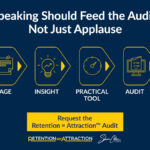
How the Retention = Attraction™ Audit Helps Leaders Identify Retention Challenges
Understanding employee turnover requires more than knowing how many people have resigned. Leaders also need to examine the costs, workplace conditions, and organizational practices that may contribute to those departures.
The Retention = Attraction™ Audit is designed to help business owners and organizational leaders take a more structured look at these challenges.
Through the audit, organizations can:
- Estimate the financial impact of employee turnover.
- Identify potential leadership and communication gaps.
- Review operational factors that may affect retention.
- Understand priority areas that need attention.
- Develop a practical 90-day action plan with clear actions and ownership.
The process uses a scorecard to gather information about the organization, including headcount, hiring and exit activity, time to fill positions, employee ramp-up time, leadership practices, and operational signals.
After requesting access and completing the scorecard, organizations receive a compiled audit and a readout to review the findings and agree on next steps.
For business owners who want to understand what turnover is costing their organization and where to focus their improvement efforts, this provides a practical starting point.
Explore the Retention = Attraction™ Audit and take a closer look at the factors influencing employee retention in your organization.
Build a Workplace Where People Want to Stay
Reducing employee turnover is not about finding one solution that works for every business. It requires understanding why employees leave and addressing the leadership, communication, and workplace factors that influence their decisions.
For small businesses, this means looking beyond recruitment and focusing on the everyday experiences that shape employee satisfaction and commitment.
Stronger management, clearer communication, a supportive workplace culture, meaningful recognition, and opportunities for growth can all contribute to a healthier employee experience.
Most importantly, employee retention needs to become an ongoing leadership priority rather than a reactive response to resignations.
Shawn Collins works with business owners and organizational leaders to strengthen leadership, improve communication, and build workplace cultures that support stronger teams.
If your organization is experiencing employee turnover or struggling to retain valuable people, start by understanding what may be driving the problem.
Explore the Retention = Attraction™ Audit to identify potential retention challenges, understand the cost of turnover, and determine where your organization can take action.