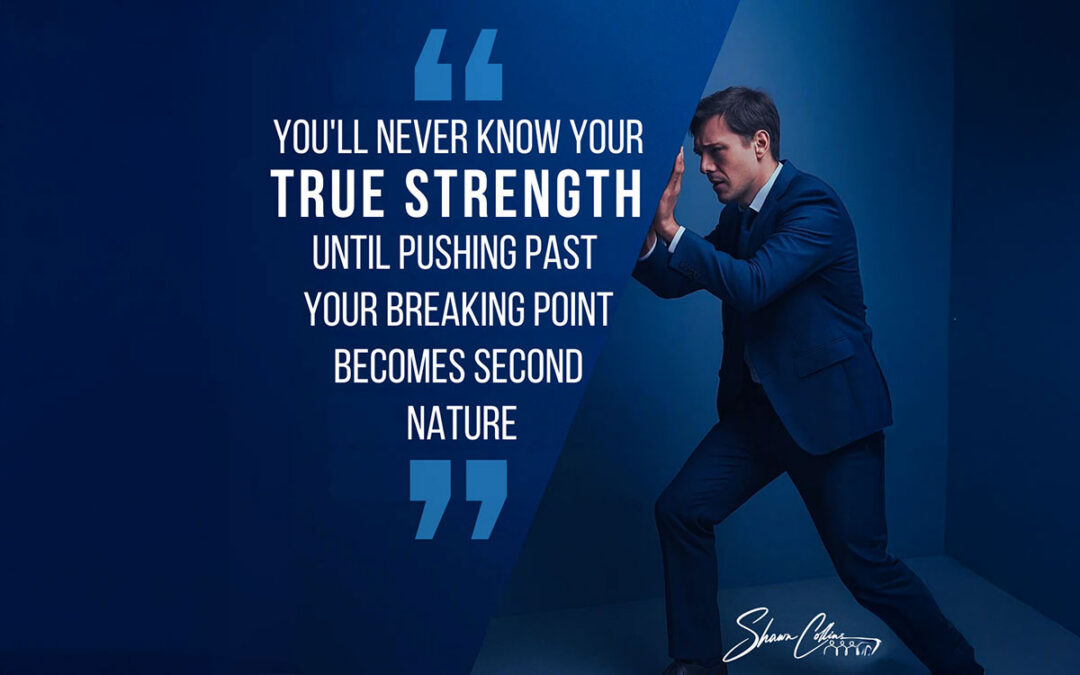
You will never know your true strength as a leader until pushing past your breaking point becomes second nature. Not drama, not burnout, but a settled decision that you will not be defined by your first limit.
Understanding True Strength In Leadership
In business, strength is easy to fake. You can raise your voice, tighten the deadlines, or push your team harder and call it “high standards.” That is not strength. That is pressure without purpose.
True strength is your capacity to stay clear, calm, and anchored in your values when everything around you feels stretched. It shows up when cash is tight, when talent is scarce, when conflict is high, and you still choose character over convenience.
The Three Layers Of True Strength
For business owners, HR directors, and entrepreneurs, strength has three core layers you can build on purpose.
- Mental toughness is your ability to stay focused on what matters instead of reacting to fear or frustration. It sounds like, “This is hard, but I am not quitting clarity.”
- Resilience is your capacity to get hit, learn, adjust, and stand back up without losing your sense of calling. You let the moment shape you, not break you.
- Adaptability is how quickly you can realign your approach while keeping your values and mission intact. Strategy can move. Character does not.
When those three work together, pressure becomes a proving ground, not a graveyard.
Pushing Beyond Perceived Limits
Your perceived limit is rarely your actual limit. It is the point where your habits, mindset, and comfort zone run out. True strength begins where those end.
As a leader, you push past limits when you:
- Have the hard conversation you have delayed and do it with clarity and kindness.
- Own your mistakes in front of your team and invite honest feedback.
- Refuse to sacrifice people for short term wins, even when pressure is high.
- Stay present at home and at work instead of numbing out when you are tired.
For leaders guided by faith, this is more than stamina. It is stewardship. Your influence is on loan, and how you handle pressure reveals who you trust.
Leadership strength is not about how much you can carry alone. It is about how clearly, courageously, and consistently you lead when you feel close to your edge.
Reflection for today: Where do you act strong, but feel hollow, and what would it look like to choose clarity and character instead of control in that one area?
Recognizing Your Breaking Point
You cannot build strength you refuse to see. The same is true of your limits. If you treat every strain as “just a busy season,” you miss the warning lights that God and your own body are trying to give you.
Your breaking point is not weakness. It is the honest line between what your current habits can carry and what your calling now requires.
Personal And Professional Breaking Points
Breaking points show up in two connected arenas, your inner life and your leadership life.
- Personal breaking points sound like, “I am short with everyone,” “I cannot turn my brain off,” or “I feel numb even when I am winning.” Sleep, health, and relationships start to pay the price.
- Professional breaking points show as constant reactivity, chronic firefighting, or decisions driven by fear instead of conviction. Meetings drift, standards wobble, and clarity disappears.
When both start to blur, you are not “pushing hard.” You are living beyond your current capacity.
Signals You Are Near Your Edge
You do not need a crisis to know you are close to a breaking point. Watch for patterns like these:
- You feel resentment when people ask for clarity or support.
- You avoid key decisions and hope “more time” will fix them.
- Your inner dialogue shifts from “I can learn this” to “I am done.”
- Your team mirrors your stress with silence, sarcasm, or withdrawal.
These are not random mood swings. They are indicators of growth potential. They reveal where your current mindset, systems, or skills are too small for the weight you are carrying.
The Power Of Owning Your Vulnerabilities
As a leader, you are tempted to hide these limits. That choice keeps you stuck. Strength grows when you can say, “This is where I am thin, and this is where I need help, learning, or a different rhythm.”
- Call your breaking point what it is, not what sounds acceptable.
- Ask, “What is it like to be on the other side of me right now?” Then listen without defense.
- Invite trusted people to speak into your blind spots and your pace.
For a faith guided leader, this is an act of humility. Admitting limits is not quitting, it is agreeing that you are not the source of all strength.
Action for this week: Identify one area where you feel closest to your edge, name the specific signals you see, and share that with one trusted person so you can begin to build new capacity instead of pretending you are fine.
Building Resilience As A Second Nature Habit
Resilience is not a personality trait that some leaders have and you missed. It is a spiritual and practical muscle you can train until steady under pressure becomes your normal, not your exception.
When resilience becomes second nature, pressure no longer owns your mood, your decisions, or your culture. You feel the weight, but you choose your response with clarity instead of reacting from fear.
Shift Your Mindset From Surviving To Stewarding
Start with how you think about hard seasons. Most leaders either try to outrun stress or wear it like a badge. Both keep you shallow.
- Replace “I have to get through this” with “I am being trained by this.”
- Ask, “What is this pressure trying to teach me about my leadership, systems, or priorities?”
- View resilience as stewardship of influence, not personal toughness. You are responsible for how your strain affects everyone around you.
For a faith guided leader, resilience starts with trust. If God has allowed this load, He has also provided the wisdom and people you need to carry it well.
Daily Habits That Build Your Capacity
Resilience grows through small, repeatable choices, not heroic moments. Treat it like training.
- Clarity check in: Begin each day with a simple review of your top priorities, the people who need you most, and one decision you will not avoid.
- Bounded work blocks: Work in focused segments with planned pauses, even brief ones, to reset your breathing, posture, and attention.
- End of day review: Ask, “Where did I lead from conviction, and where did I lead from anxiety?” Capture one lesson for tomorrow.
Your habits either drain your resilience or deposit into it. Choose rhythms that leave you a little stronger, not constantly emptied.
Simple Stress Management That Honors Your Limits
Stress will visit. Your job is to keep it from moving in. Use straightforward tools you can repeat on your busiest days.
- Use a short breathing pattern when you feel activated, for example, inhale, hold, and exhale for the same slow count.
- Practice “single focus” in meetings, no multitasking, so your brain is not living in five fires at once.
- Create a short “reset ritual” between work and home, such as a walk, silence in the car, or a written prayer of release.
These small resets protect your clarity. Clear leaders absorb pressure without leaking it onto everyone else.
Build A Culture That Normalizes Perseverance
Resilience will never be second nature in your company if it only lives in your head. It has to move into your culture.
- Talk about the struggle: Make it normal to say, “This season is heavy, and here is how we will walk it together.”
- Set shared expectations: Define what perseverance looks like on your team, for example, clear communication, owning mistakes, asking for help early.
- Model recovery: Take your rest, honor your boundaries, and let people see you choose health over constant grind.
When resilience is modeled, named, and practiced, it stops being a motivational word and becomes part of how your people show up every day.
Next step: Choose one mindset shift, one daily habit, and one culture practice from this section, and commit to them for the next [insert time frame] so resilience can move from concept to muscle memory in your leadership.
Leadership Growth Through Challenge
Hard seasons do not just test your leadership, they reveal the parts of you that are ready to grow. When you choose to stay present in challenge instead of escaping it, you give God and your own character something solid to work with.
Pressure, handled with clarity and integrity, matures you faster than comfort ever will. It sharpens how you think, how you decide, and how you carry the people who trust you.
Stronger Decisions Under Pressure
Challenge has a way of stripping away your illusions. When resources are tight, relationships are strained, or timelines are compressed, you can no longer afford vague priorities or half clear expectations.
- You learn to separate noise from signal and focus on the few decisions that truly move the mission.
- You stop reacting from fear and start asking, “What is the most aligned decision with our values and long term culture?”
- You become more consistent, which builds trust, even when the outcomes are not perfect.
Pressure is a mirror. It shows whether you really believe what you say you value, or if it was just language on a slide deck.
Challenge As A Catalyst For Innovation
When everything feels easy, most teams drift toward comfort. When challenge hits, you are forced to re examine assumptions, systems, and habits that were quietly wasting energy.
- You are pushed to redesign processes that only worked when things were calm.
- You invite your team into problem solving instead of trying to be the hero, which multiplies ideas.
- You become more open to new methods, while holding your mission and standards steady.
For a faith guided leader, this is where trust deepens. You start to pray less for escape and more for wisdom, courage, and creativity inside the pressure.
Confidence That Your Team Can Feel
There is a different kind of confidence that only appears on the other side of challenge. Not bravado, not denial, but a quiet conviction that says, “We have been stretched before, and we grew. We can do it again.”
- Your presence steadies the room instead of adding anxiety.
- Your words carry weight because your team has watched you live them when it was costly.
- Your people feel safer to take ownership, raise problems early, and stay engaged under strain.
Resilient leadership is contagious. When you keep showing up with clarity, courage, and calm, your team learns that challenge is not a threat to avoid, it is a training ground for who you are becoming together.
Leadership practice: Identify one current challenge that frustrates you most, and ask, “How could this be training my decision making, my creativity, or my confidence?” Choose one small behavior that reflects that growth and practice it in your next [insert specific context].
Balancing Persistence With Well Being
Pushing past your limits is part of leadership. Living past your limits is how burnout starts. The leaders who last are not the ones who grind the hardest, they are the ones who know when to push, when to pause, and when to say, “Not now.”
Persistence without well being is not strength. It is neglect, and your team will feel the cost long before you admit it.
Prioritize What Actually Matters
Most leaders are not short on effort, they are short on focus. You say yes to too much, then try to power your way through with longer hours and more willpower.
- Clarify your top [insert number] priorities for this season, not just this week.
- Ask, “Which responsibilities require me, and which can be shared, delayed, or delegated?”
- Score requests against those priorities with a simple filter such as “mission critical, important, or optional.” Act accordingly.
Every yes has a cost. Wise leaders count that cost against their energy, their families, and their culture before they commit.
Set Boundaries That Protect Your Calling
Boundaries are not walls to keep people out, they are guardrails that keep you faithful to what matters most. Without them, persistence turns into performance, and you start leading from emptiness.
- Define clear start and stop times for work on most days, then protect them as strongly as you protect client commitments.
- Limit “always on” communication by setting expectations for response times and escalation paths.
- Choose at least one regular block where you are unavailable for meetings so you can think, pray, and plan.
For a faith guided leader, boundaries are an act of trust. You are admitting that you are not God, and you do not have to be everywhere for things to move forward.
Use Recovery And Reflection As Discipline
Recovery is not a reward for surviving the week. It is part of how you steward your strength for the next one. Reflection turns that recovery into wisdom.
- Daily micro recovery: Short pauses for breathing, stretching, or silence between intense blocks of work.
- Regular true rest: A recurring time where you stop producing, stop planning, and let your mind and body reset.
- Structured reflection: A simple rhythm of questions such as “What drained me, what filled me, what needs to change?”
Rest is a leadership skill. Leaders who refuse to rest quietly train their teams to ignore their own limits.
Action to take: Choose one priority shift, one boundary, and one recovery rhythm you will put in place for the next [insert time frame]. Tell your team what you are changing and why, so they see that long term strength is part of how you lead, not an afterthought.
Implementing Strategies In Your Business Or HR Role
Resilience will not shape your culture until it shows up in your calendar, your conversations, and your systems. As a business owner, HR director, or entrepreneur, your job is to translate conviction into structure.
Healthy pressure, handled with clarity, must move from personal practice to shared way of working. That is where culture shifts from ideas to habits.
Lead With Resilience In Your Daily Style
Start by letting resilience shape how you personally lead. People follow what you normalize, not what you announce.
- Adopt a steady communication rhythm such as brief weekly touchpoints where you share priorities, tensions, and what you are learning under pressure.
- Use clear language under stress, for example, “Here is the challenge, here is what we know, here is what we are deciding today.” Avoid panic talk or vague optimism.
- Practice the question “What is it like to be on the other side of me right now?” with your direct reports and receive their input with gratitude, not defensiveness.
For a faith guided leader, this is where character becomes visible. Your calm, your honesty, and your humility are acts of stewardship, not personality quirks.
Bake Resilience Into Employee Development
If resilience only lives in your head, it dies when you leave the room. Build it into how you grow people.
- Create simple training blocks that teach skills like emotional self awareness, conflict clarity, and stress management using a repeatable framework such as “notice, name, choose.”
- Include resilience goals in development plans, for example, “grow in handling difficult conversations” or “lead through ambiguity” with clear behaviors and check ins.
- Use tools that give a shared language, such as a voice or communication framework, so teams can say, “Here is how I tend to react under pressure, and here is what I need from you.”
Development without character formation is just skill stacking. Development that strengthens resilience builds people who can carry more without breaking.
Shape Policies And Culture Around Healthy Pressure
Resilient culture is not accidental. It shows up in how you design expectations, benefits, and norms.
- Clarify what “pushing hard” means in your company, including how you expect people to communicate, ask for help, and protect their well being in intense seasons.
- Align policies with your message, such as reasonable work hour norms, clear time off practices, and meeting standards that respect focus and recovery.
- Normalize honest check ins about load and capacity in team meetings so stress is surfaced early, not buried until someone breaks.
Culture is what you tolerate and what you celebrate. If you praise constant grind and ignore quiet faithfulness, do not be surprised when burnout becomes part of the story.
Next leadership move: Choose one shift in your personal leadership, one adjustment to your development approach, and one culture or policy change that will support resilience in your organization. Put them on your calendar this week, and share them with your team so they see that strength under pressure is now part of how you lead together.
Encouraging A Culture Of Strength And Growth
You have worked hard to grow your own resilience. The next step is building a culture where that same strength becomes normal for everyone, not just the top of the org chart. If resilience stays personal, your people still feel alone in their pressure.
A strong culture treats challenge as shared training, not private shame. People can admit they are near their edge, get support, and keep moving forward with clarity.
Normalize Honest Conversations About Pressure
Resilient cultures start with honest language. Your team needs to hear that pressure is expected, not ignored, and that struggle is discussable, not disqualifying.
- Begin key meetings with a quick “load check” where people rate their current capacity using a simple shared scale such as low, medium, high.
- Use clear framing like, “This is a stretch season. Here is what we are asking of each other, and here is what we will not sacrifice.”
- Invite leaders at every level to share how they are handling pressure and what they are learning, not just the polished wins.
When struggle has language, it loses some of its power. People stop hiding and start owning their reality.
Create Shared Practices Around Growth
Strength and growth cannot be random. They need repeatable practices that your whole organization can recognize and join.
- Adopt a simple reflection rhythm such as a weekly “what stretched me, what did I learn, what will I do differently” check in for teams.
- Build team habits like debriefing intense projects with two lenses, results and resilience, so you ask, “How did we show up under pressure?” not just, “Did we hit the target?”
- Use a shared communication framework so people can express needs under strain, for example, “Here is what I am experiencing, here is what I need from you to stay effective.”
For a faith guided leader, these practices are discipleship of character. You are shaping how people respond to fire, not just how they hit goals.
Celebrate The Right Kind Of Strength
What you celebrate, you multiply. If you praise only heroic late nights and emergency saves, you will quietly train your culture to ignore limits and hide fatigue.
- Highlight stories of people who spoke up early when they were at capacity and worked with their team to adjust, instead of burning out in silence.
- Affirm leaders who stay calm and clear in conflict, even when the outcome was messy, as models of strength under pressure.
- Recognize teams that supported one another during a hard season and still honored boundaries, rest, and communication standards.
Real strength is faithfulness under pressure, not constant sacrifice of health for short term wins.
Your next move: Look at what your culture currently celebrates when things get hard. Choose one new behavior that reflects true strength under pressure, define it clearly, and start calling it out by name in your next [insert meeting or communication], so your people know the kind of resilience you want to grow together.

About the Author
Shawn Collins
Shawn Collins is a leadership strategist, keynote speaker, and founder of EXTEND GROUP. Since 1997, he has helped organizations strengthen leadership, improve communication, and build cultures that drive performance. As a GiANT-certified consultant in 5 Voices, 100X Leader, and 5 Voices for Teams, Shawn equips leaders with practical tools to create alignment, increase retention, and make strategy stick.