A Diagnostic Only Matters If Leaders Use It
A report is not the win.
The win is what leaders do after the readout.
That is why the Retention = Attraction™ Audit is designed to be practical from the start. It is not meant to become another document that gets passed around, discussed once, and stored in a folder. It is meant to help owners, operators, finance leaders, and
HR leaders see the pattern, agree on what matters first, and move into the first 90 days of action.
Owners do not need more confusion. They need a safer first step.
Why Owners Hesitate
Many leaders already have a bad memory tied to assessments, surveys, or consultant reports.
They filled out forms. Employees answered questions. A presentation was delivered. The readout sounded interesting. Then the real work got buried under daily pressure.
That experience creates hesitation.
So when an owner hears the word Audit, the concern is reasonable: Is this going to become another report? Is it going to demand too much time? Is it going to expose problems without helping us act? Is it going to turn into a large commitment before we know what we need?
The Retention = Attraction™ Audit is built to avoid that problem.
The first step is not a big program. The first step is clarity.
What Happens After the Request
The process is simple on purpose.
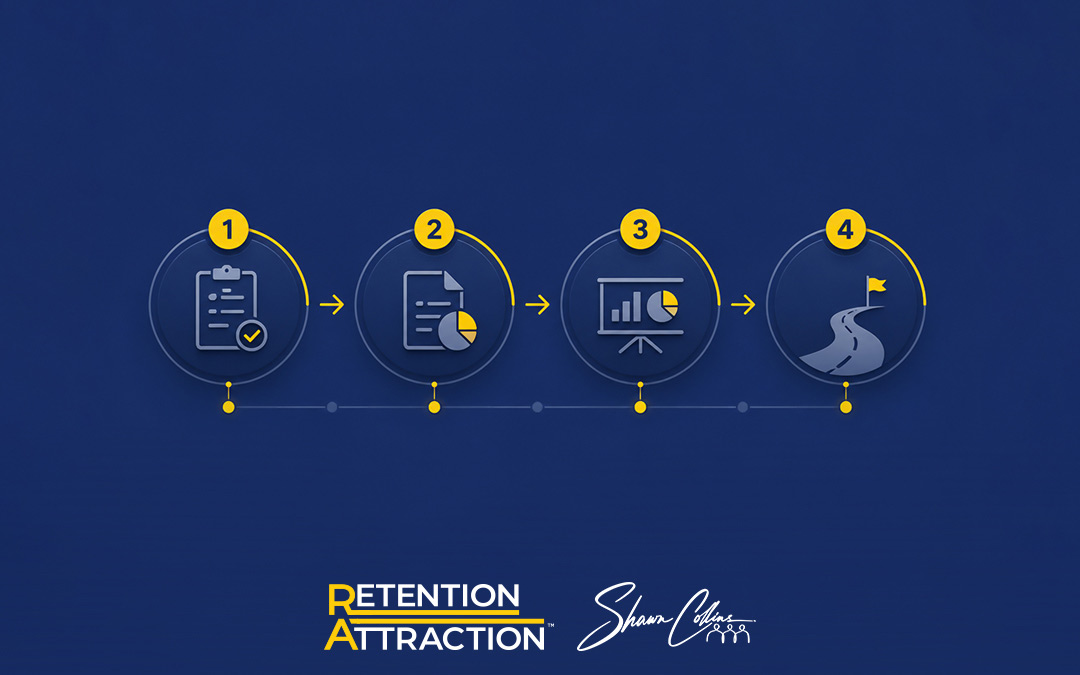
- Request
The leader starts by requesting the Audit at shawncollins.com/retentionaudit. The goal is to confirm interest, fit, and the business problem that needs attention. - Inputs
The organization provides practical inputs tied to retention, turnover, team strain, leadership patterns, and operating friction. The goal is not to overwhelm the team. The goal is to gather enough information to make the first read useful. - Readout
The readout gives leaders a clearer view of where cost, risk, and friction appear to be concentrating. It is designed for decision-makers, not only for HR. The owner should be able to understand the signal. Finance should be able to see the cost conversation. Operations should be able to see where reliability is affected. HR should be able to use the readout to support real action. - 90-Day Path
The first 90 days should not attempt to fix everything. The purpose is to identify a small number of practical moves that can create better rhythm, reduce confusion, and help leaders focus where the signal is strongest.
A Practical Example
A 90-person company requests the Audit because turnover has become a steady complaint. The owner believes pay is the main issue. HR is tired of recruiting. The operations leader is frustrated by schedule gaps.
The readout shows that pay may matter, but the stronger signal is new-hire confusion and manager inconsistency in two areas of the business.
The first 90-day path does not start with a company-wide reset. It starts with a focused operating move:
- Clean up new-hire expectations in the first 30 days.
- Create a weekly manager follow-up rhythm.
- Clarify what gets communicated at the start of each week.
- Give leaders a simple scorecard for retention risk signs.
That is not glamorous. It is useful.
The company now has a better first move than “recruit harder.”
The Audit Is Not Another Employee Survey
A survey can be helpful. A survey can also become a trap if leaders collect input they do not plan to act on.
The Audit is different in purpose. It is meant to connect employee retention risk with leadership behavior, operating friction, and business cost. It helps leaders see where the organization may be paying for misalignment, unclear expectations, weak manager rhythm, or preventable churn.
The goal is not to gather opinions for the sake of more data.
The goal is to support a better leadership decision.
Use the Audit as the Front Door
The Retention = Attraction™ Audit is the front door because it lowers the risk of guessing.
It helps leaders avoid three common mistakes:
- Buying a broad solution before understanding the pattern.
- Blaming HR for a leadership and operations problem.
- Treating turnover as a single number instead of a signal.
If you need a practical first step, start with the Audit.
What the First 90 Days Should Do
The first 90 days should create movement without trying to fix the entire company at once.
A practical 90-day path may focus on manager communication, role clarity, onboarding handoffs, team meeting rhythm, feedback habits, or one high-risk department. The exact focus depends on what the readout shows.
The best first moves are specific, visible, and repeatable.
They should answer:
- What are we fixing first?
- Who owns the rhythm?
- What will change in the next 30 days?
- What signal will tell us if the change is working?
- How will leaders stay accountable?
Clarity only matters if it changes behavior.
What Makes the First 90 Days Work
The first 90 days work best when leaders choose focus over volume.
A common mistake is trying to act on every finding at once. That creates noise. Teams hear a burst of activity, then watch it fade.
The better move is to choose the few issues that carry the most risk and build a rhythm around them.
That rhythm might include a weekly manager huddle, a clearer new-hire handoff, a standing follow-up conversation, or a simple scorecard tied to the priority area. The specific play matters less than whether leaders keep returning to it.
People trust what leaders repeat.
If employees see leaders name the issue, act on it, and follow up, the company earns credibility. If employees see another announcement with no rhythm behind it, cynicism grows.
Who Should Be in the Readout
The readout should not belong to one department.
The owner needs to hear the business risk. Finance needs to hear the cost logic. Operations needs to hear where reliability is strained. HR needs to hear what leadership can act on without turning the work into another unsupported initiative.
When those leaders hear the same readout together, the company has a better chance of moving from agreement to action.
That is the practical value of the Audit. It gives the right leaders a shared starting point.
From there, the team can choose fewer actions and execute them better. The first 90 days should reduce noise, not add more meetings with no owner.
A safe first step does not mean a small issue. It means leaders can begin without guessing, overcommitting, or turning the work into another unsupported project. That lowers resistance and creates cleaner ownership.
It also gives Shawn and the leadership team a stronger sales and service path. The Audit creates a shared read before any longer engagement is discussed, which makes the next decision more grounded.
If you want to understand what is happening before committing to a larger plan, request the Audit and start with a grounded first step.

About the Author
Shawn Collins
Shawn Collins is a leadership strategist, keynote speaker, and founder of EXTEND GROUP. Since 1997, he has helped organizations strengthen leadership, improve communication, and build cultures that drive performance. As a GiANT-certified consultant in 5 Voices, 100X Leader, and 5 Voices for Teams, Shawn equips leaders with practical tools to create alignment, increase retention, and make strategy stick.