The Question Before Q3 Planning
Before July planning fills the calendar, ask one question:
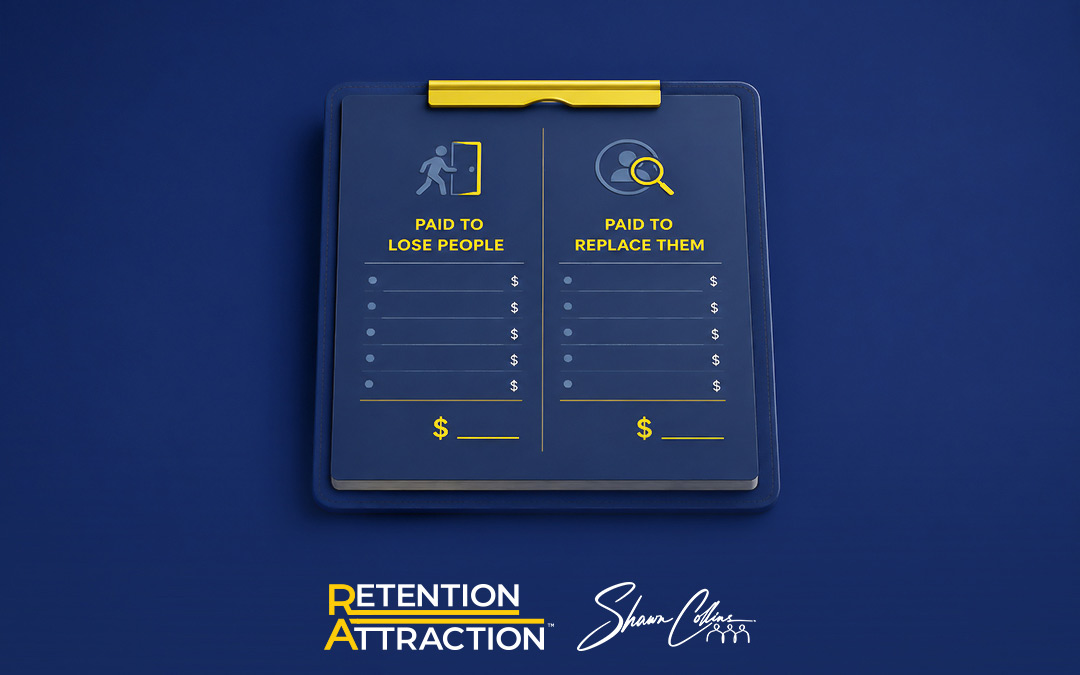
What are we paying for twice?
Most owners can name obvious costs. Payroll. Insurance. Materials. Rent. Software. Vehicles. Equipment. Recruiting. Training.
Turnover hides inside several of those lines at once.
A company can pay once when good people leave, then pay again to replace them. It pays when knowledge walks out. It pays when the seat is empty. It pays when managers shift time from leadership to coverage. It pays when a new hire needs training. It pays when the team absorbs extra load. It pays when customer experience becomes inconsistent.
Then, after all that, the business pays to recruit again.
That is paying twice.
Churn Creates Duplicate Cost
Turnover is not one event. It is a chain of cost.
Someone leaves. Work gets redistributed. The manager adjusts schedules. The team stretches. Recruiting starts. Interviews take time. Training begins. Productivity ramps slowly. Mistakes happen. Customers feel the unevenness. Strong employees wonder whether leadership sees the strain.
The company may treat the replacement hire as the fix. But if the internal reason people leave remains unchanged, the replacement enters the same risk pattern.
That is how owners pay twice, then sometimes three times.
They pay for the loss. They pay for the replacement. They pay again if the same system keeps producing the same exit.
The Planning Trap
Quarterly planning can make this worse.
Leaders plan new sales targets, production goals, hiring needs, equipment upgrades, events, marketing pushes, and growth priorities. Those plans assume the company has enough stable capacity to execute.
If retention risk is left out of the planning conversation, the plan may be built on a weak base.
A company may commit to more growth while the team is already stretched. It may add hiring goals without studying the roles it keeps replacing. It may invest in marketing while customer delivery depends on unstable staffing. It may forecast revenue while ignoring the manager bandwidth being spent on churn.
Growth planning without retention clarity can become wishful math.
A Practical Example
A 75-person distribution company enters July planning with strong revenue goals. Sales are healthy. Demand is there. The owner wants to push into Q3 with more speed.
The company also has a warehouse turnover problem.
At first, leaders treat it as an HR and labor-market issue. They need more applicants. They need faster hiring. They need a bigger candidate pool.
Then the team looks closer.
The warehouse has repeated new-hire exits in one role. The first week is inconsistent. Two supervisors train the same role differently. Schedule expectations are not explained well. Strong employees are covering gaps and growing frustrated. The operations leader is spending too much time managing coverage.
The Q3 plan says “grow.”
The staffing pattern says “stabilize first.”
That does not mean the company should stop growing. It means the company should protect the capacity growth depends on.
What Paying Twice Looks Like
Owners often pay twice in places that do not sit neatly on one report.
They pay twice when recruiting replaces people faster than leadership repairs the reason they left.
They pay twice when onboarding restarts every month because early expectations are unclear.
They pay twice when overtime fills the gap but drains the people who remain.
They pay twice when managers spend their best hours covering churn instead of improving the business.
They pay twice when customers experience inconsistency and the company has to work harder to keep trust.
The line item may not say “retention failure.” The business still pays.
Ask Before July Gets Crowded
July planning moves fast. Once the calendar fills, the business can slip back into reactive mode.
That is why owners should ask the retention question before Q3 gets crowded:
- Which roles are we paying to replace too often?
- Which teams are carrying hidden overtime because of churn?
- Which managers are spending too much time on coverage?
- Which customer promises are being strained by staffing instability?
- Which issues keep showing up after each new hire arrives?
These questions do not slow growth. They protect it.
Start With the Audit
The Retention = Attraction™ Audit gives owners a practical way to see where the business may be paying twice. It connects retention risk, leadership habits, operating friction, and cost signals so leaders can decide what to fix first.
Before Q3 planning locks in, find out where the business is paying twice.
Retention Protects the Plan
The strongest Q3 plan is not the most ambitious one. It is the one the team can actually execute.
That requires capacity. Capacity requires stable people. Stable people require clear expectations, manager consistency, trust, communication, and follow-up.
Owners do not need to turn every planning meeting into an HR meeting. They do need to recognize that retention is a business issue. If the people system is leaking, the sales plan, operations plan, and customer promise will all feel it.
Retention protects margin.
Retention protects manager time.
Retention protects customer trust.
Retention protects the plan.
The Cost Owners Do Not Always Name
The hardest cost to name is lost leadership attention.
Every hour a manager spends backfilling a role is an hour not spent coaching, improving process, strengthening customer delivery, or developing the next leader. Every hour an owner spends worrying about staffing instability is an hour not spent on the work only the owner can do.
That attention cost compounds.
A company may still hit revenue goals while quietly burning manager capacity. It may still satisfy customers while making reliable employees absorb strain. It may still grow while building fragility into the way work gets done.
Q3 planning should protect attention, not only budget.
A Better July Decision
The better July decision is not to pause every growth goal until retention is perfect. That will never happen.
The better decision is to identify the few retention risks most likely to block the plan. Then leaders can address those risks with focus.
If new hires keep leaving in one role, clean up the first 30 days. If one team is carrying overtime, study the cause. If one manager group creates repeated friction, equip them. If communication breaks during growth, set a better rhythm.
Growth is easier to fund when the people system can carry it.
That is the owner logic behind Retention = Attraction™. Keep more of the right people, and the business does not have to spend as much replacing avoidable loss.
The owner who asks this question before Q3 planning gets one advantage: the ability to act before the cost repeats.
That is what July planning should protect. Not activity for its own sake. Not another hiring push without a retention read. A business plan should include the people risk that can break the plan.
When owners name that risk early, they give managers permission to fix the right issue before it becomes another emergency.
If July planning is starting and you do not know where turnover is costing you twice, make that visible now.

About the Author
Shawn Collins
Shawn Collins is a leadership strategist, keynote speaker, and founder of EXTEND GROUP. Since 1997, he has helped organizations strengthen leadership, improve communication, and build cultures that drive performance. As a GiANT-certified consultant in 5 Voices, 100X Leader, and 5 Voices for Teams, Shawn equips leaders with practical tools to create alignment, increase retention, and make strategy stick.