Annual Turnover Averages Can Hide the Real Cost
Owners and CFOs do not need a softer conversation about turnover. They need a clearer one.
Annual turnover averages can make the problem look normal. A company sees 18 percent turnover and decides the number is acceptable for the industry. The team moves on. The budget absorbs recruiting spend. Managers ask for help. HR keeps reporting the same number.
But the average may be hiding the hotspot.
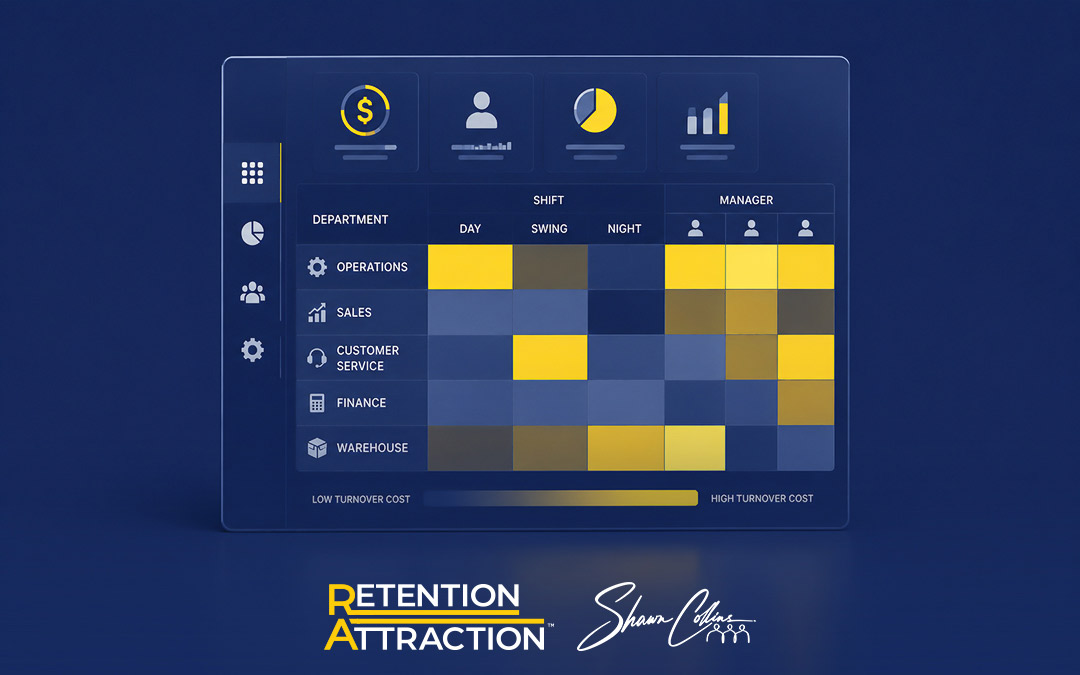
The real cost often appears when turnover is viewed by department, shift, role, manager, or location. A company-wide number can look manageable while one part of the business is leaking people, capacity, customer trust, and margin.
That is where the cost conversation changes.
The Average Is Not the Pattern
Averages are useful, but they can make turnover feel cleaner than it is.
If ten people leave across ten teams, the company has one kind of problem. If ten people leave from one department, one shift, or one manager group, the company has a different problem.
The second version points to concentration. Concentration means the business has a place to look first.
That matters to owners because turnover is rarely just an HR number. It touches labor cost, overtime, customer experience, safety, quality, schedule, training time, and manager capacity. If the concentration is missed, the company keeps spending money in broad ways while the real issue sits in a specific place.
Averages can make owners feel informed while the real pattern remains hidden.
What the Cost Includes
Turnover cost is not limited to recruiting fees.
A departing employee can create direct cost and indirect cost. Direct cost can include advertising, screening, interviewing, background checks, onboarding, training, and temporary coverage. Indirect cost can include lost productivity, slower service, rework, manager time, employee fatigue, and missed customer expectations.
Work Institute has used a conservative turnover-cost estimate tied to a percentage of base salary. The exact number for your company still depends on role, wage, complexity, training time, and operational risk. The point is not to pretend every number is perfect. The point is to stop treating churn as if it is free.
Owners do not need false precision. They need useful clarity.
A Practical Example
A 140-person manufacturer sees 22 percent annual turnover. The owner and controller assume the number is high, but manageable. The company has always had churn.
Then the team breaks the number down.
Most departments are stable. One shift has a much higher exit pattern. A specific supervisor group has repeated new-hire loss inside the first months. Overtime is also higher in that area. Quality issues have risen. The plant manager has been spending more time on coverage than process improvement.
The average hid the real story.
The issue was not “company turnover.” It was concentrated friction in one operating area. That changed the business response. The owner did not need a company-wide campaign. The company needed a focused look at expectations, manager habits, handoffs, training consistency, and follow-up rhythm in the hotspot.
That is the difference between chasing symptoms and finding the pattern.
Why This Matters to the CFO
Finance leaders care about cost, but they also care about assumption discipline.
A weak turnover conversation says, “People are leaving, so we need better culture.” That does not give finance much to work with.
A stronger conversation says, “Turnover is concentrated in this area, tied to these roles, affecting these cost categories, and likely creating this operating drag. Here is where we should look first.”
That is a better business conversation.
The CFO does not need culture language that floats above the numbers. The CFO needs a read on where churn is hitting margin, capacity, and payback.
Use the Audit to Find the Hotspot
The Retention = Attraction™ Audit is designed to help leaders move from a broad concern to a clearer business read. It looks at where turnover, friction, and leadership habits may be creating cost, then helps identify what to address first.
If your turnover number feels normal but your operations feel strained, look for the concentration.
Owners Pay for Concentration
Turnover concentration creates pressure that averages cannot show.
A stable department can mask a struggling one. A high-performing manager can hide the damage caused by a weak one. A strong day shift can hide a night-shift problem. A good annual report can hide a messy weekly reality.
Owners pay for the messy reality.
They pay when managers are pulled into interviews instead of coaching. They pay when employees work overtime to cover gaps. They pay when customer delivery becomes inconsistent. They pay when new people leave before the training investment has time to return value.
When concentration is visible, leaders can make better decisions.
They can focus on the team or shift that needs attention. They can equip the manager who needs help. They can clean up training handoffs. They can adjust communication rhythms. They can stop spreading energy across the entire company when the strongest signal is coming from a specific area.
The Better Question
Do not stop at “What is our turnover rate?”
Ask:
- Where is turnover concentrating?
- Which roles are we replacing repeatedly?
- Which managers are carrying the highest risk?
- Where is overtime rising with exits?
- Where are customer or quality issues tracking with churn?Where are new hires failing to settle in?
Those questions move the company from reporting to decision-making.
What Owners Should Ask Finance to Pull
The first financial review does not need to be complex.
Ask for the last 12 months of voluntary exits by department, role, shift, and manager group. Add overtime by team. Add recruiting cost by role if available. Add average time-to-fill and first-90-day exits where the data exists.
Do not overbuild the report. The first goal is pattern recognition.
When leaders see the pattern, the cost conversation becomes more useful. A role with modest pay can still create large drag if it turns over often, takes time to train, or forces experienced employees to absorb coverage. A single team can create cost that gets hidden inside a company-wide number.
This is where owner discipline matters. Do not let the conversation become a blame session. The goal is to find the strongest signal, not embarrass a department. Once the signal is visible, leaders can decide whether the issue is hiring fit, manager rhythm, training consistency, schedule pressure, role clarity, or something else.
Why This Belongs in Planning
Turnover concentration should affect planning because it affects capacity.
If a department has unstable staffing, that department may not be ready for added sales volume. If a role is churning early, the company may be overestimating available labor.
If one shift carries the turnover, the business may have a reliability issue that will surface during busy periods.
The cost is not only what has already happened. The cost is what the business cannot execute next.
When the pattern is visible, leaders can protect capacity before the next busy season exposes the same weakness again.
If your company knows the turnover number but not the pattern, start there.

About the Author
Shawn Collins
Shawn Collins is a leadership strategist, keynote speaker, and founder of EXTEND GROUP. Since 1997, he has helped organizations strengthen leadership, improve communication, and build cultures that drive performance. As a GiANT-certified consultant in 5 Voices, 100X Leader, and 5 Voices for Teams, Shawn equips leaders with practical tools to create alignment, increase retention, and make strategy stick.